“Sick In The Head” Quotes

I recently read “Sick In The Head: Conversations About Life and Comedy” by Judd Apatow. Below are the quotes I found most interesting. Since it’s an interview book, the person who says the quote is listed in bold directly above the quote. If you like the quotes, please buy the book here.

Screen Shot 2015-09-22 at 6.19.37 PMJudd Apatow
“There’s this quote from John Cassavetes. He said, “I don’t care if you like me or hate me, I just want you to be thinking about me in ten years.”” (20)

“We were willing to go down for the show. It would have been awful if one of us said, “Let’s do all these changes – I really want to keep this job.” (97)

“You have to have a dream before you can execute it. That the people who succeed are the ones who think through what the next stages of their careers might be, and then work incredibly hard, day after day, to attain their goals. They don’t just flop around like fish. They have a vision, and they work their assess of to make it a reality.” (101)

“Do not be afraid to share your story, or to be vulnerable and open when telling it.” (130)

“It taps into the national neurosis in a way, where people are so happy to not be unhappy.” (223)

“My approach was always: This is an impossible job for Garry. I’m just going to try and help him in any way I can. But other people, when they would pitch a joke that didn’t get through, would get angry at Garry. And that was destructive.” (232)

“I shoot an enormous amount of film, and when I’m shooting what I think to myself is, If I hate this scene in editing, what would I wish I had? And so as I’m shooting, I’m shooting many permutations of the scene. It might be different lines or alts. If it’s too many, let me get something a little less mean. If it seems sentimental, I might get something edgy. I usually have like a million feet of film that in my head – I’ve edited every permutation and I’m just flipping things in and out so at the end of it I’m reasonably happy.” (264)

“So much of the conversation about diversity on TV should be about subscribers and advertisers. If the networks thought they could make more money creating shows with diverse casts they would do it in a second. They’ve clearly decided there’s not enough money in it. Every once in awhile they throw a bone to the idea of diversity, but it’s not a high priority.” (269)

“David Milch said executives don’t want to give notes and don’t want to stand behind their opinions. Executives want you to have enough power or reputation so that if you screw up, it’s your screw up, not theirs. The whole thing is inverted. Executives are looking for ways to not be responsible. And when you achieve a certain level of success, you’ll notice that some executives disappear because they have deniability about the process. “Of course I trusted Judd, he’s had enough success that I should let him do what he wants to do.” It’s actually harder for them to work with young people, because then they have to be responsible.” (270)

“Everybody told me you get five bombs before you go out of business. You can withstand five. your budget will get lower every time you have a bomb.” (270)

“Sometimes you make things and, the whole time, you’re aware that it might not make money, and yet it’s what you should be making at this moment in time and you hope it will connect in a big way because it is unique and personal. You have to try to do things that are more challenging to the audience. Those often become the biggest hits. Sometimes they don’t make a ton of money.” (271)

“I always heard that from Larry David. That was his big inspiration. He was willing to walk away from Seinfeld when they would give him bad notes.” (302)

“You write movies to figure out why you’re writing the movie.” (370)

“The thing that really makes a lot of these movies possible is that when we do the auditions, Seth reads with every actor trying to get a part in the movie. So by the time the movie is shot, he has read with like two hundred people. Through that process, we figure out who his character is and we try to problem-solve all the issues of the movie. So we’ll hold auditions for parts even though we kind of know who we want for the part, just to hear it with that person – and that almost becomes the rehearsal of the movie.” (427)

“With comedy, as soon as you succeed, you have some credibility and then they trust you more.” (442)

Jerry Seinfeld
“I wanted to be around it, you know. I never thought I’d be any good at it. But that turned out to be an advantage because it made me work harder than most other people.” (9)

Albert Brooks
“My friend Harry Nilsson used to say the definition of an artist was someone who rode way ahead of the herd and was sort of the lookout. Now you don’t have to be that, to be an artist. You can be right smack-dab in the middle of the herd. If you are, you’ll be the richest.” (28)

“I sum up all of show business in three words: Frank Sinatra Junior. People think there’s nepotism in show business. There’s no nepotism on the performing side, especially in comedy. I don’t know of any famous person that can tell an audience to laugh at their son.” (40)

“If I’ve learned anything – anything – getting older, it’s the value of moment-tomoment enjoyment. When I was young, all my career was “If I do well tonight, that means that Wednesday will be better. That means I can give this tape to mya gent and…” It was thiis ongoing chess game. And that is a really disappointing game, because when you get to checkmate, it never feels liek it should. And there’s another board that they never told you about. So if I come here and talk to you, if I have an enjoyable three hours, god damn it, that counts.” (45)

Chris Rock
“I did some things that sucked. But you learn more from fucking up than you do from success, unfortunately. And failure, if you don’t let it defeat you, is what fuels your future success.” (70)

“I did stand-up for fifteen years before I broke, you know.” (70)

Jason Segel
“We would get the script on a Friday, and Seth and James and I would get together at my house every Sunday, without fail, and do the scenes over and over and improve them and reallyt hink about them. We loved the show. And we took the opportunity really, really seriously.” (95)

Seth Rogen
“We felt if we made the scenes better on the weekend, if we came in with better jokes, they would film it. And they would! And we didn’t know it at the time, but that was completely unindicative of probably every other show that was on television.”

James L. Brooks
“I think the whole thing with writing – generally, you push and push and push and then, come on already, when do you pull? At a certain point, it pulls. I mean it’s pulling you forward and you’re not working so hard. You’re not laboring. You’re serving. Laboring becomes serving.” (145)

Jerry Seinfeld
“I was a minimalist from the beginning. I think that’s why I’ve done well as a comedian. If you always want less, in words as well as things, you’ll do well as a writer.” (186)

Jimmy Fallon
“We just went in knowing that we might get canceled. And if you’re going to go down, you have to go down doing what you like doing and what’s fun for you, because I don’t ever want ot do something painful and then have everyone go, “Hey, that works. Keep doing that painful thing for years.”” (216)

“Out of all the things I watched to get ready for this job, Larry Sanders was the ultimate – that’s the ultimate piece of advice I’d tell anyone to watch if you’re doing a talk show. It’s so real and so well done. That’s how a show gets made.” (221)

Jon Stewart
“Think of how much energy it takes to fuck with people. What if you try to use that energy to get the show done faster and better and get everybody out by seven? If I go into the morning meeting and I have clarity, and I can articulate that clarity, everybody’s day is easier. If that doesn’t happen, it’s my fault.” (231)

“Intention is a really big thing at this show. We always want to know where’s the intention, and, now, let’s find a path to that intention.” (232)

“It’s so important to remove preciousness and ownership. You have to invest everybody in the success of the show, and to let them feel good about their contribution to it without becoming the sole proprietor of a joke. There has to be an understanding that, that may be a great joke, but it might not serve the larger intention, or the narrative, of the show. You have to make sure that everybody feels invested without feeling that type of ownership.” (233)

Larry Gelbart
“I don’t worry about what they’ll get. I write for myself on the assumption that there are a number of people who have similar sensibilities and will appreciate what it is that I thought was good enough to present, not to them but to me.” (261)

Louis C.K.
“You want it to be compelling, that’s all. The likable thing is not really worth much. It’s a low-wattage bulb, you know.” (301)

“I never cared if I got cancelled. That’s the only thing that makes me do this stuff well, is I was willing to let the job go any day.” (302)

Mel Brooks
“John Calley said, “Mel, if you’re going to go up to the bell, ring it.” (335)

Michael O’Donoghue
“The way that you program is you put your best thing first, and your second-best thing second, and your third – because you’re just trying to fight sleep.” (353)

Mike Nichols
“I’m too good of a director to like me as an actor. I can get better people.” (366)

Roseanne Barr
“Today they want no part of anything having to do with class on TV. No part. Because it’s too true.” (399)

Spike Jonze
“When I’m making a movie, I want to be responsible and listen to the concerns of the people who gave me the money. But at a certain point, I have to put that all out of my mind because it’s not the responsibility of that movie. That movie’s responsibility is to be true to itself. If I don’t get to make another movie, I’ll make something else. I’ll make a movie for a milion dollars. I’ll go write a short story.” (440)

“I just don’t start to make another movie until I feel clean again from the last one.” (443)

“My job really isn’t to know how many people are going to like something. My job is to know what a movie’s about to me, and to know that I need to make it. It’s somebody else’s job to say, “okay, that budget makes sense or doesn’t make sense.” Once they gamble on it, that’s their gamble and I’m gonna be their partner in it, but we have to support each other.” (444)

“When I finished Her, I thought, Okay, I’ve done everything I can do to give this as much love as I could give it and now it’s gonna go off and be what it’s gonna be. If it gets loved I’ll be proud and if it gets hated it’ll hurt, but I also know that what I have done with my friends and collaborators will never change.” (447)

Liked the quotes? Click here to buy the book.
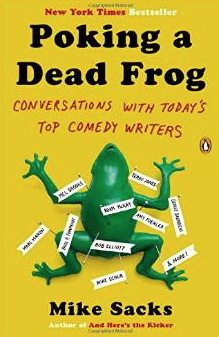
“Poking A Dead Frog” Quotes

I recently read “Poking A Dead Frog: Conversations With Today’s Top Comedy Writers” by Mike Sacks. Below are the quotes I found most interesting. (Since this is an interview book, the person saying it is the underlined name above the quote). If you like the quotes, please buy the full book here.

Screen Shot 2014-12-23 at 12.40.35 PM“Sometimes magic is just someone spending more time on something than anyone else might reasonably expect.” -Teller

“All great comedy has managed to circumnavigate executive meddling. But this is easier said than done.” (xiv)

“Each came to this business primarily because he or she wanted to create the sort of comedy that they themselves enjoyed the most. For all of them – be they writers of sketches, graphic novels, screenplays, New Yorker cartoons, fiction, nonfiction, television, stand-up, the radio – success was a by-product, not the goal.” (xv)

James Downey
“I avoid anything I feel is a cheap laugh based on shock or just being dirty. You can always get a laugh, but you don’t want it to come at the price of your dignity.” (11)

(Sometimes the audience just wants to laugh.) “They do, that’s right. But sometimes writers overlook this. Not performers, though. If the audience is laughing, they’re happy.” (12)

“Writers are much more interested, and maybe even obsessed, with originality. We sometimes treat comedy as a science, where advances are made, and we must always move forward, never backward. So that once something has been done, it should perhaps be built upon, but never, ever repeated. For performers, the fact that something has been done before is, I think, neither here nor there. For writers, it’s a real problem, and sometimes we can tie ourselves up in knots worrying, ‘Is this too similar to that other thing?’” (12)

“I think we need to be ahead of our audiences, but not so much that we lose them.” (12)

“Unless you’re making an observation, and that observation is true – and I hope fresh – it’s not worth writing a piece.” (14)

“I’m less worried about a bad piece than about missing a great one.” (22)

Terry Jones
“We made it a point to end sketches when they might have just been beginning on other shows.” (25)

Diablo Cody
“Always be working on your own material. Write specs! Though I’ve been hired to write studio projects, everything I’ve ever gotten produced has been an original spec script that I just wanted to write on my own. I wasn’t being paid for them. Other people’s ideas are never as important as yours.” (31)

Mike Schur
“TV comedy writing is a team sport. That’s just the deal.” (34)

“Something David Mamet once said sums it up perfectly: ‘Doing a movie or a play is like running a marathon. Doing a television show is like running until you die.’” (35)

“The number of people watching TV on their own schedule, through Hulu or iTunes or whichever platform they prefer, is rising exponentially. And it’s never going back the other way.” (36)

“TV comedies only work long-term if the characters are three-dimensional and great.” (42)

“Shows get picked up based on their pilots, which is directly analogous to judging a book by its first ten pages.” (42)

“TV is about presenting an inviting world in which audiences want to invest their time, regularly, over many years. Jokes help because, you know, they make people happy. But what makes people love a show, and get attached to it, is great characters having great adventures.” (43)

“Television is not about quantity anymore; it’s very much about quality – and specificity.” (44)

“The most valuable and unteachable asset in a comedy writer is a unique voice. That is my top priority in hiring people-does this person sound like everyone else, or is there something about how he or she puts words and sentences and ideas together that sticks out?” (47)

“Complacency is a classic mistake. Some people get to a certain point and go, ‘Okay, I’ve figured it out!’ Writing isn’t a thing you figure out – ever. My favorite things I’ve ever written, I hate.” (47)

“To stay vibrant and successful, you can’t ever feel like you know what you’re doing. Your attitude has to constantly be, ‘Who is this rank amateur, and how can I teach him how to write?’” (48)

“No writer should ever breathe easy. You should constantly figure out how to write better stories and better jokes, more three-dimensional characters, how to change what isn’t work. If you don’t, you’re gonna lose your touch.” (48)

Todd Levin
“A desk piece must be generic enough to accommodate all kinds of jokes, familiar enough to require very little setup, and fresh enough that it hasn’t already been attempted in more than a half century of late night comedy.” (52)

“Never underestimate the importance of carefully weaving your own voice into your submission well enough that it cannot easily be separated from your ideas. That’s the balance that I think is important to strike: supplying something familiar that no one ever saw coming.” (57)

Henry Beard
“You hate to admit it, but it’s all luck. It’s just really all luck.” (73)

James L. Brooks
“If it’s good, you will be noticed. If you’re an actor, you need other people in order to act; a director needs other people in order to direct. But writers can be alone in a room and do what they do, without any help. It’s all in their hands. And sooner or later, someone will give it a read.” (82)

Peter Mehlman
“The (Seinfeld) writers would come up with their own storylines, and then we’d pass them to Jerry and Larry, who would either accept or reject them. If you couldn’t come up with story lines, you were let go. But there was no one room in which the writers had to sit and write and pitch out ideas.
You know, having a writers’ room is very conducive to getting nothing done. You get a lot of people in there and you go off on tangents and people are going to the bathroom and going out and getting coffee. Everybody just wants to get out of that room.” (109)

Paul F. Tompkins
“If you approach everything from a pure creative angle, the work and employment will take care of itself.” (113)

“Just be around and engage people in a pure way and you’re going to get more work that way.” (113)

Adam McKay
“We always try to make our movies one-third satire, one-third parody, and one-third original storytelling.” (118)

“Del Close had a key tenant: always go to your third thought.” (123)

“Now, filmmakers can record the laughs from a test audience at a screening, and we can then cut to the rhythm of those laughs, the rhythm of the audience. We synchronize the laughs with the film. We can really get our timing down to a hundredth of a second.” (130)

“There’s no greater comedy killer than receiving a note that says a character’s not likable enough. The second you see someone write that, you know they don’t know a thing about comedy. The entire game is to make your character as awful and irresponsible as possible, while still keeping at oe in the pool of his still being a human being. I mean, that’s the game. That’s the game you’re playing. The more despicable your guy can get away with behaving while still remaining on the side of the audience, the funnier it’ll be. Seinfeld is the greatest example of that ever.” (131)

“I wasn’t as obsessed with “Why didn’t aht sketch get in?” Your first couple years, you think everything should be perfect. Once you let that go, it’s a really fun show to work on.” (134)

Bruce Jay Friedman
“A more accurate term (instead of black humor) would have been tense comedy-there’s much to laugh at on the surface, but with streaks of agony running beneath.” (151)

“I’m hesitant to begin a short story unless I know the last line, or a close approximation of it.” (170)

Gabe Delahaye
“I was once told, ‘You aren’t good at writing, but if you can get over that, then one day maybe you will be okay at writing.’” (203)

“Write what you think is funny. This does not mean anyone else will agree, but if you write what you hope others will think is funny, you have already alienated at least some readers.” (204)

“If you are lucky enough to get an audience for your comedy, be nice to that audience. You are lucky to have them.” (204)

Glen Charles
“There’s a sadness to all the characters. Someone once described Taxi as being a show about hell. All of the characters were essentially stuck in a very bleak environment, struggling to get out.” (216)

“We had a rule that if writers were pitching jokes and two writers came up with the same punch line at once, it was gone.” (221)

“Every show has a voice. The better the show, the better the voice.” (228)

Joel Begleiter
“I think it’s easier to get one of those gigs on pure merit (late night writer) than it is to get a traditional sitcom writing job.” (231)

“We receive SPAM e-mails all day long at the major agencies from writers who have bought e-mail address lists. They are deleted immediately. There’s not even the slightest consideration. I don’t read the letters. When a client has referred a friend of theirs, the letter is not necessary.” (233)

Marc Maron
“You never know when success is going to happen. It’s not a meritocracy; so much of it is about some weird shit aligning that’s usually out of your control, and you catch your break. And a lot of people don’t ever catch it.” (237)

George Saunders
“At the highest level, revision is about anticipating what most writers would do and then asking: Well, is there anything deeper or better or livelier that I could make happen?” (251)

“Start with the idea that all of our enemies get up in the morning feeling like they’re out to serve good. That’s a more realistic and effective view of evil, I think, even just in terms of how it actually occurs and also how one might start to defend oneself or work against that evil.” (255)

“The thing is, writing is really just the process of charming someone via prose – compelling them to keep reading.” (260)

Byrd Leavell
“Don’t even submit to an agent. you are just going to get rejected anyway. Because these days the idea isn’t enough. Going to publishers with ‘I’ve got a great idea for a humor book’ is about as useful as tweeting your breakfast menu. No one cares. Especially not publishers. All they care about is platform. They care if you’ve written something really, really funny and it’s gone viral and five thousand people have commented on it. They care that your product is the perfect thing to turn into a book that works in the market. They care how many readers you can make aware of your book when it is finally published. You have to show agents that you can do all of these things, and then, and only then, do you get to show them how good your book is.” (264)

Dave Hill
“Because I wrote only for wanting to crack up my friends, and I was cracking myself up in the process, it worked. It was the first writing packet I ever wrote that I had any fun doing, and that’s why I was able to make it good. Normally, you put pressure on yourself. And as soon as you think that you absolutely have to do a good job on it, you’re in trouble.” (266)

“Once I was truly at the point where I was not trying to get anyone’s attention, that’s when I got everything I wanted, including a manager.” (266)

“It’s going back to not really giving a shit. Do your best to entertain yourself. Or entertaining the fifteen-year-old in you. Or just creating something that you want to see exist.” (267)

Tom Scharpling
“If you know how to build jokes, you can write any other genre, including mystery and horror.” (272)

“They weren’t attempting to win a huge audience. But they stuck with it, they eventually found their audience, and it’s what they needed to do. You have to trust what you’re doing. There’s something running through everybody that others will eventually respond to.” (279)

“Look, you couldn’t pay me to listen to their music, but I still feel like I have more in common with Insane Clown Posse than I do with someone who just sits on the sidelines and shits on other people’s work and who never puts themselves on the line.” (284)

“”TV and movies are such collaborative mediums. You have to be ready to not have everything go your way – even if you’re in the top position.” (285)

“You have to appreciate the journey. You can’t control where you’re going to end up. You better appreciate the experience; otherwise you’ll never be happy.” (289)

Jon Wurster
We’re so ingrained to think that we have to do things the exact way of the status quo, but 80 percent of the status quo is miserable, you know? Everything came together for me when I stopped caring about it.” (287)

Patton Oswalt
“Have trust in amusing yourself.” (326)

“Just keep going onstage.” (326)

Daniel Clowes
“I’ll receive a lot more of a reaction when something appears on a small website than I will when something’s published in a major magazine or newspaper. The easier it is for a reader to contact you, the more responses you receive.” (334)

“The people who make the decisions in Hollywood are never the oddballs or creative types, so you have to tell them what they want to hear. It didn’t take long for us to start saying things like, ‘We want to make another There’s Something About Mary.’ We had no intention of doing that, but you must at least make the effort to be reassuring.” (343)

“I learned to get rid of everything that doesn’t work, even though I might have spent a long time on it.” (346)

Adam Resnick
“It was done for the wrong reasons-by everybody. And it was a valuable lesson – never do anything just for the opportunity. Always go with your gut – your original instinct. But then again, my gut fails me constantly, so maybe there is no lesson.” (381)

“You can’t think logically when it comes to something you’re passionate about. All you can do is keep trying. And write a lot of projects you’re not passionate about to pay the bills.” (386)

“If you’re in this business and you can cover your overhead by writing exactly what you want, you’re living the dream. And if you’re getting rich by writing what you want, you’re in an enviable position. But for most writers, it’s usually a compromise.” (387)

“What the show really hangs on are the characters and what kind of a life they have. I’d much rather see a writer come up with, ‘I knew somebody like this.’ Or, ‘What would it be like if these three people got mixed together?’ At that point, you can then ask, ‘Okay, what’s the best context for them to be in? What situation?’” (391)

Dan Guterman
“The nice thing about working aloud, where you’re basically talking out every line of a script, is that it kept the show from sounding overly written. When you write alone, and have all the time in the world, you end up rewording sentences, editing and re-editing clauses, playing around with syntax-and your jokes tend to stiffen up as a result. They sound labored over. Your writing is more prone to feeling unnatural. The oral process at Colbert was great at preventing that.” (413)

Alan Spencer
“Now the marketing people come in and tell the executive what projects to make.” (425)

Mel Brooks
“Everything I’ve ever done, I’ve started with characters. I learn what they want, what they need. Where they need to go and how they have to go about achieving that. I listen to them. You can’t just have pure action.” (438)

“Movies to me were much more lasting. TV happens too quickly, and most is never remembered.” (444)

Liked the quotes? Click here to buy the book.
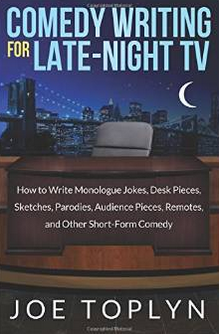
“Comedy Writing For Late-Night TV” Quotes

Screen Shot 2014-11-26 at 3.22.16 PMI recently read “Comedy Writing For Late-Night TV: How to Write Monologue Jokes, Desk Pieces, Sketches, Parodies, Audience Pieces, Remotes, and Other Short-Form Comedy” by Joe Toplyn. Below are the quotes I found most interesting. If you like the quotes, buy the book here.

“Because all late-night hosts are expected to have this same broad appeal, they all have basically the same persona. It’s a time-tested persona that has proven very popular in all sorts of media, that of a likeable, playfully irreverent everyman.” (11)

“Head writers are looking for writers who can turn out comedy material that requires very little editing to get it to the point where the host is happy with it.” (14)

“On any television show the amount of time that a writer is expected to spend at the office is inversely correlated with how well-run the show is.” (38)

“A former writer for Johnny Carson said this about writing a topical Monologue: “Doing this every day is like taking a dump when you don’t have to.”” (51)

“If a mass audience hears a joke about one of those traditionally taboo topics the subtleties of the Surprise Theory of Laughter come into play. The audience might want to be surprised by the incongruity in the punch line but they won’t laugh because the incongruity isn’t harmless. The incongruity harms them because it makes them think, “If I laugh at that punch line I’m a horrible person.”” (61)

“A good topic for a Monologue joke has to meet six conditions. It must be:
factually true
not intentionally funny
only one sentence long
a news item that will capture most people’s interest
something that your audience will let you joke about
something that your host is willing to joke about” (67)

“Yes, a comedian should be outspoken, puncturing hypocrisy and taking shots at emperors, venerable institutions, and celebrities. But if the comedian tries to educate his audience they won’t laugh.” (72)

“The job of a comedy/talk show host isn’t to get his audience to discuss his jokes. His job is to make his audience laugh, immediately and loudly, and to do that he can’t say the emperor’s not wearing any clothes. Instead, he has to tell the audience something they already know.” (72)

“To make your jokes as funny as possible…
Shorten as much as possible.
End on the laugh trigger.
Backload the topic.
Make everything clear.
Don’t telegraph the punch line.
Make the punch line parallel.
Use stop consonants, alliteration, and assonance.
Wildly exaggerate.
Get specific.
Use the Rule of Three.
Don’t be too on-the-nose.
Consider an act-out.” (115)

“Your parody and the original video should be very similar in at least these nine ways:
actors
tone
visuals
pace of the editing
music
on-screen text
length
format
structure” (260)

“The best packet to submit to a comedy/talk show that’s currently being broadcast is one you’ve written specifically for that show.” (342)

“What types of comedy pieces does the show do? Desk Pieces? Story Sketches? Audience Pieces? Does the host perform characters? Does the show do Semi-Scripted Field Pieces? If so, who goes out on location, the host or a correspondent? Not very show does all the types of comedy pieces covered in this book.
What is the host’s persona? …
How big a budget does the show seem to have? …
Are celebrities enlisted to participate in the show’s comedy? If so, are they A-listers or C-listers? If you pitch an idea that requires a celebrity, you want to suggest someone who’s gettable.
What audience does the show seem to be aimed at?” (346-347)

“‘The same, but different’ is a paradoxical principle that governs the production of most forms of American mass entertainment. What it means is that a new television show, say, has to be in many ways the same as other, successful television shows. That’s because that sameness reassures the television executives who approve the production of the expensive new show that it will be successful, too. But a new television show also has to be different in some significant ways from every other television show because those differences will make the show seem somewhat fresh and therefore more attractive to viewers.” (348)

“Remember that your overall goal is to submit material that’s as close as possible to being immediately useable on your Target Show.” (352)

“Submit each idea for a new comedy piece in the format recommended by every head writer I’ve ever talked with. This is the same format that staff writers on comedy/talk shows use to submit their own new ideas to their head writers. The format consists of these three elements for each idea you submit:
Title: Give the comedy piece a good title, one that the host could use when introducing the piece on the show. A good title is descriptive, punchy, and short.
Premise: State the basic concept of the piece in, at most, a couple of short paragraphs, briefly describing the participants and what they do. Also include any key production details. Your goal here is to get your readers to quickly visualize how the piece would play out on the show and to convince them that it’s producible. Keep your description straightforward. Don’t embellish your description with little quips, which will just distract and annoy the reader. Save your comedy for the sample jokes.
Sample jokes: Provide your best three or four sample jokes for the piece, with each joke comprising at most a few sentences. The reason to include these jokes is to convince your readers that the piece would get laughs. In the case of a sketch idea, the sample jokes should be funny things that happen (“beats”) in the sketch, including how the sketch ends.” (355)

“The best way [to write monologue jokes] – Write all your Monologue jokes within a week of when you submit your packet to the show… even if your submission packet is read months after you submit it, the fact that all the Monologue jokes were written during the same week will be apparent to your readers because of the topics you’ve used. You’ll still have shown your writing speed and your dedication to your craft and, even though your jokes may seem dated, your readers will still be able to judge the skill that went into creating them.” (356)

“If your Target Show doesn’t specify a length for submission packets, keep yours to eight to ten pages.” (358)

“The piece you think is funniest should go first… The piece you think is second-funniest should go second. You want to convince your readers that your first piece wasn’t a fluke and to hook them into reading even more of your material.
The piece you think is third-funniest should go last, so your readers will read something strong right before they have to decide what to do with your submission.” (358)

“Type it in regular 12-point Courier.” (359)

“If seeing a particular photo or graphic is necessary to understand a joke, show the actual photo or graphic on the page.” (360)

“Lay out each page so that it’s easy-to-read and inviting. Don’t fill your pages with long, intimidating blocks of text; build in plenty of white space.” (360)

“Don’t put a cover on your submission, just a title page laid out like the one in the sample packet.” (360)

“Your script should parody a TV show promo, a commercial, a movie trailer, or a PSA.” (366)

“Write a generic packet almost exactly the same way you’d write a customized packet but include these comedy pieces:
one page of Monologue jokes
two pages of new ideas for Desk Pieces
one page of new ideas for Audience Pieces
one fully-scripted Parody Sketch (two pages maximum)
one page of new ideas for Semi-Scripted Field Pieces
one page of new ideas for other live pieces like Liev Joke Basket Sketches” (371)

“The ideal person to read your packet is the host of the show. If the host wants to hire you, you’ll have a job. But getting your submission packet to the host without first going through somebody else on the show’s staff is almost impossible. So instead your goal should be to have the head writer read your submission.” (376)

“The best way to have your packet read by a head writer is to convince someone the head writer knows to give it to him.” (377)

“The most useful spec scripts are probably an original pilot and an episode of a well-regarded show that’s currently on the air and will probably stay on the air for another season or two.” (388)

“agents are highly accustomed to dealing with people on the phone, which is why written queries are likely to be less effective with them.” (388)

“Most hiring of writers for prime-time TV shows – sitcoms and son on- tends to take place in the spring.” (390)

“Just be casually witty, good-natured, and enthusiastic. Say some nice things about the writing on the show, maybe about a particular comedy piece that you liked recently. Tell your interviewer that you’d love to work on the show. You don’t have to prove you’re talented; your submission has already done that. You just have to demonstrate that you’d fit comfortably into the staff and not drive everybody nuts.” (392)

“Men can’t go wrong with jeans, sneakers, and a long-sleeved, collared shirt… The idea is to look as though you already work there.” (392)

Liked the quotes? Click here to buy the book.
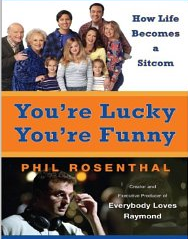
“You’re Lucky You’re Funny” Quotes

I recently read “You’re Lucky You’re Funny: How Life Becomes a Sitcom” by Phil Rosenthal. Below are the quotes I found most interesting. As always, if you like the quotes, click here to buy the book.

Screen Shot 2014-11-03 at 12.15.18 AM“Almost every experience I’m writing about here will somehow be used later. You’ll see. And what you’ll also see is that as you go through life as a writer, it’s easier to write thing down than to actually write.” (56)

“Then there are the people who are running shows who have no business doing that because they are not ready to run a show yet. They were on staff of a hit show and sold a pilot. But they don’t know what they’re doing and don’t know what they want and they’re operating from fear and nervousness. Their minds are changing all the time because they just don’t know what they want. Or they’re listening to the network’s or the studio’s notes and assuming they know what they want. you have to know what you want.” (62)

“The single best piece of advice I ever got from anyone about anything. It was from Ed Weinberger. He said, ‘Do the show you want to do, because in the end, they’re going to cancel you anyway.’” (67)

“There are umpteen factors you can’t control. So you have to make sure the ones you can control are so fantastic, they trump the ones you can’t. Your show has to be undeniable.” (70)

“The networks don’t like what’s called a premise pilot – one where the premise of the series is established – because it’s not indicative of what the other episodes will be like. They want an episode that could be episode number two or twelve or thirty.” (80)

“Comedy isn’t just comedy, it’s clarity. Without that clarity, you’re only funny to yourself.” (100)

“We started with a few rules in The Writers’ Room:
Could this happen?
No topical jokes.
No B stories.” (101)

“At the end of the day, you know the best way to reconcile your feelings with people who’ve done you wrong? Just keep this in mind: They have to be them. That’s their punishment.” (125)

“There are dry-erase boards all around us on the walls. One board has the places we order lunch from. One has the places we like to go out to. One board has words that Ray can’t pronounce, and the way he actually does pronounce them, which come out of his mouth sounding like Einsteen and mispronunctuation. Another board is titled “Ray’s Surprise Vocabulary” and has some lofty words Ray has actually used correctly in a sentence, like “sharecropper.”
Several boards have the name and number of every episode we’ve done so far, so that when someone has a great idea, someone else can usually point to the board and say, “Number sixty-seven, you moron. We did it already.” And then there are teh boards with the color-coded ideas. And these colors actually mean something, not like the government with its terror alerts. A certain color indicates this is just an idea. Another color might indicate we got somewhere on that story – we have actual notes on it. And another color means it was turned into an outline already, which means we’re doing it. If we’ve already gotten to the outline stage, it’s very rare that we’ll throw it out.” (132-133)

“We were always looking for the deeper meaning in every story, something that would have some kind of resonance with the audience, no matter how silly on the surface.” (140)

“Half the day is working on future shows, and the other half is this week’s show.” (140)

“No matter how seemingly silly the episode was, we felt the need to tie each one down to some sort of emotional underpinning, something that would resonate with the viewer after the show was over.” (167)

“The best note I ever received as an actor I got when I was doing too much on stage – you know, trying to be funny… she said, ‘It was very good, but let them come to you.’
‘Let them come to you’ means just be. Don’t playact at being the character, just be the character. Just be. Just live. Don’t push. So that applies to everything. It’s one of those notes that applies to everything in life. Let them come to you. Just be. Just be you. Don’t push; they’re going to like you at the party. It’s going to be fine. We tend to like people who are real and believable and are like us. It doesn’t mean you don’t do anything, but you don’t push it. You don’t show the audience that you’re doing an action. ‘Look how I brush my hair away from my face so slowly to show I’m really interested in what the other actor is saying’ – you just are interested. Same in writing.” (170-171)

“Everyone in our cast had it. The deadpan look. To me the golden key in comedy is: They know what you’re thinking. That’s what we take so any pauses in the show. So that the look will get the laugh because the audience, once the characters have been established, knows what Robert is thinking when Ray gets a big homemade cake from Mom. And we know what Debra is thinking. And Frank. And Marie and Raymond.” (171)

“It’s all a struggle toward simplicity and clarity – from the writers’ story, to the show in front of the live audience, to the show as broadcast on television.” (174)

“Sometimes it’s a goddamn struggle to figure out what an episode is about. What is it about? That’s at the bottom of everything. What is it about. What is this scene about? What is this line about? What is this word about? Or, is it worth stopping the scene for that joke? What if it doesn’t advance the story – and not every line has to advance the story – we are in the comedy business – but is it worth stopping for Frank to insult his wife at this moment? Usually, you bet it is. Everyone has his or her part to play. Everyone has his or her character that we look forward to seeing.” (174)

“You have to justify every action and attitude the character takes, or they don’t make sense.” (175)

“It’s good writing if the setup is funny in and of itself. Then the audience doesn’t know they’re being set up – that’ sa good setup. It’s not dry, it’s not boring, it’s not what we call “pipey” – as in, it’s so obviously information that the audience needs to know just to understand what the hell is going on, it’s as if we’re laying pipe. We don’t want the audience to know it’s just exposition, the part they have to sit through before we get to the kitchen burning down.” (178)

“Say it without saying it is a great rule. You don’t want to be so on the nose; you want the subtext to come through. First of all, you have to have text before there can be subtext, right? But the show, what is it about? You don’t want ot say it blatantly in lines; you want it to be there, understood. You never want to say, “I am angry.” That’s bad writing, right? Too on the nose. So you want to say it without saying it. You want to say I love you without saying it.” (180)

“If we want the audience to care about the show, we have to care about it, and we worry and fret over every detail. I have to save for another book the decisions about costume, hair, and set design; personal dramas; how the show is advertised; how the film is developed – there’s a tremendous amount of work that goes into making a half hour look seamless. Fred Astaire would practice dancing until his feet were bleeding. Every move, everything, where to turn, every decision, how to hold his head, his hands, every split second of that dance had been choreographed to within an inch of its life so that when you watch it, it appears effortless. Same with this. Same with any good play, film, TV show, book, painting, vagina sculpture. You shouldn’t think to look under the sucks; you just enjoy the dancing.” (181)

“Everything is tested to death, under unrealistic conditions, and testing’s main use has become ass covering. So that any given executive doesn’t have to take the blame for a decision but can point to the numbers when the thing tanks, and say, “It wasn’t my decision; it tested well.” If every show tests well that the networks put on, there’s clearly something wrong – for instance, the only reason the Stupid Show test “very well” is because the audience recognized the lead. The quality of the show meant nothing. “I know that guy! I turn the knob on my approval meter to the right.” End of testing. And so the show goes on and it stinks because that’s not how anybody watches television, but sometimes enough people watch to justify the process, and then the end of civilization.” (193)

“My attitude was, it all just gets richer. Robert marries Amy, and at first he thinks he has what he thinks Raymond has. However, once he gets married he will see he’s still Robert. He still doesn’t have the place in his mother’s heart that Raymond has, and so he may feel worse. Robert could have everything Raymond has – he could even have twin boys. He could have triplets. He could have a better life in every way than Raymond has, but he will never be Raymond. THe circumstances may change, but not his character. We’re changing the sit, not the com.” (199)

“I want every episode to have some truth revealed so that it’s something that the audience identifies with in their lives, that has resonance. That’s the whole point. And if you work in the sitcom form, which is fast, like a short story, the challenge is: How do you get that emotional punch or meaning in that short form?” (199)

“I can also tell you that while running our show, I learned a helluva lot from the other side of casting. Advice to my fellow actors: Always memorize your audition, and don’t treat it as an audition, treat it as a chance to perform that day. Then, if you don’t get it, it’s not because you weren’t prepared, and you can at least feel good about yourself. And always try to get the first appointment. If you’re good, you’ll be the one to beat. If you’re bad, it wasn’t you, it was the idiot doing the casting.” (217)

“The work is its own reward. I’d heard that from some guy.” (221)

“Things need time to grow. By the way, about reality shows, why are they so popular now, at the expense of comedies? Because a lot of comedies are not writing real people. The characters are not believable as people. So we turn on a reality show and we say, ‘That character is funny!’ That’s a real person that we recognize and relate to, because we understand what it’s like to be a real person. So when we watch a sitcom and the characters speak like nothing on the planet, and don’t act human, and they’re cardboard cutouts of human beings, I’d rather watch the reality show. Even though it’s not reality, the people on them remind me of people. We know this, don’t we? Even if we don’t know it and can’t articulate it all the time, we know it intrinsically. ‘Why am I not relating to his?’ Because this is not dialogue that anyone would say, this not a situation that anyone could believably be in. And here’s a person in a reality show that’s plopped in the middle of an island, and he’s acting more like a person I’m in the office with than this person on a sitcom who is actually in an office setting.” (237)

“We’re looking to connect. That’s all we do as human beings on the planet – look to connect with other human beings. So we look for the most relatable, connectable thing. Subconsciously, not even consciously.” (237)

Did you like the quotes? Buy the book here.

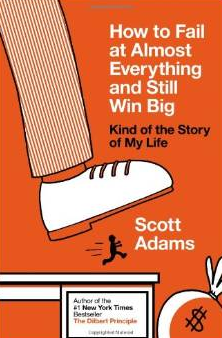
“How To Fail At Almost Everything And Still Win Big” Quotes

How To Fail At Almost Everything And Still Win Big CoverI recently read “How To Fail At Almost Everything and Still Win Big: Kind Of The Story Of My Life” by Scott Adams (the creator of Dilbert). Below are the quotes I found most interesting. As always, if you like the quotes please buy the full book here.

“Every skill you acquire doubles your odds of success.” (3)

“Happiness is health plus freedom.” (3)

“Simplicity transforms ordinary into amazing.” (3)

“Making comics is a process by which you strip out the unnecessary noise from a situation until all that is left is the absurd-yet-true core.” (5)

“Good ideas have no value because the world already has too many of them. The market rewards execution, not ideas.” (17)

“For our purposes, let’s say a goal is a specific objective that you either achieve or don’t sometime in the future. A system is something you do on a regular basis that increases your odds of happiness in the long run. If you do something every day, it’s a system. If you’re waiting to achieve it someday in the future, it’s a goal.” (33)

“I figured my competitive edge was creativity. I would try one thing after another until something creative struck a chord with the public. Then I would reproduce it like crazy. In the near term it would mean one failure after another. In the long term I was creating a situation that would allow luck to find me.” (40)

“If you want success, figure out the price, then pay it.” (46)

“When you decide to be successful in a big way, it means you acknowledge the price and you’re willing to pay it. That price might be sacrificing your personal life to get good grades in school, pursuing a college major that is deadly boring but lucrative, putting off having kids, missing time with your family, or taking business risks that put you in jeopardy for embarrassment, divorce, or bankruptcy. Successful people don’t wish for success; they decide to pursue it. And to pursue it effectively, they need a system. Success always has a price, but the reality is that the price is negotiable. If you pick the right system, the price will be a lot nearer what you’re willing to pay.” (46)

“Let your ideas for the future rule your energy today. No matter what you want to do in life, higher energy will help you get there.” (67)

“It’s smarter to see your big-idea projects as part of a system to improve your energy, contacts, and sills. From that viewpoint, if you have a big, interesting project in the works, you’re a winner every time you wake up.” (67)

“I’m better than 99 percent of the world in Scrabble, Ping-Pong and tennis because I put in more practice time than 99 percent of the world. THere’s no magic to it.” (70)

“You shouldn’t hesitate to modify your perceptions to whatever makes you happy, because you’re probably wrong about the underlying nature of reality anyway.” (72)

“Every generation before us believed, like Snickers (my dog), that it had things figured out. We now know that every generation before us was wrong about a lot of it. Is it likely that you were born at the tipping point of history, in which humans know enough about reality to say we understand it? That is another case where humility is your friend. When you can release on your ego long enough to view your perceptions as incomplete or misleading, it gives you the freedom to imagine new and potentially more useful ways of looking at the world.” (72)

“Where there is a tolerance for risk, there is often talent.” (88)

“Things that will someday work out well start out well. Things that will never work start out bad and stay that way. What you rarely see is a stillborn failure that transmogrifies into a stellar success. Small successes can grow into big ones, but failures rarely grow into successes.” (88)

“The quality of the early products was a poor predictor of success. The predictor is that customers were clamoring for the bad versions of the product before the good versions were even invented.” (89)

“Bad luck doesn’t have the option of being that consistent forever.” (90)

“It’s generally true that if no one is excited about your art/product/idea in the beginning, they never will be.” (91)

“If your work inspires some excitement and some action from customers, get ready to chew through some walls. You might have something worth fighting for.” (91)

“You can raise your market value by being merely good – not extraordinary – at more than one skill.” (96)

“When I combined my meager business skills with my bad arts skills and y fairly ordinary writing talent, the mixture was powerful. With each new skill, my odds of success increased substantially.” (98)

“Recapping my skill set: I have poor art skills, mediocre business skills, good but not great writing talent, and an early knowledge of the Internet. And I have a good but not great sense of humor. I’m like one big mediocre soup. None of my skills are world-class, but when my mediocre skills are combined, they become a powerful market force.” (99)

“Everything you learn becomes a shortcut for understanding something else.” (99)

“I don’t read the news to find truth, as that would be a foolish waste of time. I read the news to broaden my exposure to new topics and patterns that make my brain more efficient in general and to enjoy myself, because learning interesting things increase my energy and makes me feel optimistic. Don’t think of the news as information. Think of it as a source of energy.” (100)

“You can’t directly control luck, but you can move from a game with low odds of success to a game with better odds.” (101)

“If you find yourself in a state of continual failure in your personal or business life, you might be blaming it on fate or karma or animal spirits or some other form of magic when the answer is simple math. THere’s usually a pattern, but it might be subtle. Don’t stop looking just because you don’t see the pattern in the first seven years.” (103)

“Today when I see a stage and a thousand people waiting to hear me speak, a little recording goes off in my head that says today is a good day. I’m the happiest person in the room. The audience only gets to listen, but I get to speak, to feel, to be fully alive. i will absorb their energy and turn it into something good. And when I’m done, there’s a 100 percent chance that people will say good things about me.” (106)

“Children are accustomed to a continual stream of criticisms and praise, but adults can go weeks without a compliment while enduring criticism both at work and at home. Adults are starved for a kind word. When you understand the power of honest praise (as opposed to bullshitting, flattery, and sucking up), you realize that withholding it borders on immoral. If you see something that impresses you, a descent respect to humanity insets you voice your praise.” (107)

“Dilbert was the first syndicated comic that focused primarily on the workplace. At the time there was nothing to compare it with. That allowed me to get away with bad artwork and immature writing until I could improve my skills to the not-so-embarrassing level.” (109)

“Quality is not an independent force in the universe; it depends on what you choose as your frame of reference.” (109)

“Animation shows take longer to “tune” than live action because the writers for animation can’t know what worked in a particular show until it is fully animated and too late to change.” (111)

“Success in anything usually means doing more of what works and less of what doesn’t, and for animated TV shows that means you don’t hit your pace until about the third season.” (111)

“i no longer see reason as the driver of behavior. I see simple cause and effect, similar to the way machines operate. If you believe people use reason for the important decisions in life, you will go through life feeling confused and frustrated that others have bad reasoning skills. The reality is that reason is just one of the drivers of our decisions, and often the smallest one.” (117)

“Politicians understand that reason will never have much of a role in voting decisions. A lie that makes a voter feel good is more effective than a hundred rational arguments. That’s even true when the voter knows the lie is a lie. If you’re perplexed at how society can tolerate politicians who lie so blatantly, you’re thinking of people as rational beings. That worldview is frustrating and limiting.” (117)

“View humans as moist machines that are simply responding to inputs with programmed outputs. No reasoning is involved beyond eliminating the most absurd options. Your reasoning can prevent you fro voting for a total imbecile, but it won’t stop you from supporting a half-wit with a great haircut.” (118)

“All you do is introduce yourself and ask questions until you find a point of mutual interest.
1. What’s your name?
2. Where do you live?
3. Do you have a family?
4. What do you do for a living?
5. Do you have any hobbies/sports?
6. Do you have any travel plans?” (123)

“The reality is that everyone is a basket case on the inside. Some people just hide it better.” (130)

“In most groups the craziest person is in control. It starts because no one wants the problems that comet rom pissing off a crazy person.” (140)

“The way fake insanity works in a negotiation is that you assign a greater value to some element of a deal than an objective observer would consider reasonable. For example, you might demand that a deal be closed before the holidays so you can announce it to your family as a holiday present.” (140)

“The biggest component of luck is timing. When the universe and I have been on a compatible schedule – entirely by chance – things have worked out swimmingly. When my timing has been off, no amount of hard work or talent has mattered.” (158)

I stayed in the game long enough for luck to find me.” (158)

“The success of Dilbert is mostly a story of luck. But I did make it easier for luck to find me, and I was thoroughly prepared when it did. Luck won’t give you a strategy or a system – you have to do that part yourself.” (160)

“I find it helpful to see the world as a slot machine that doesn’t ask you to put money in. All it asks is your time, focus, and energy to pull the handle over and over. A normal slot machine that requires money will bankrupt any player int he long run. But the machine that has rare yet certain payoffs, and asks for no money up front, is a guaranteed winner if you have what it takes to keep yanking until you get lucky. In that environment, you can fail 99 percent of the time, while knowing success is guaranteed. All you need to do is stay in the game long enough.” (160)

“Experts are right about 98 percent of the time on the easy stuff but only right 50 percent of the time on anything that is unusually complicated, mysterious, or even new.” (166)

“Simply find the people who most represent what you would like to become and spend as much time with them as you can without trespassing, kidnapping, or stalking. Their good habits and good energy will rub off on you.” (170)

“The single biggest trick for manipulating your happiness chemistry is being able to do what you want, when you want.” (173)

“You need to control the order and timing of things to be happy. It’s important to look at happiness in terms of timing because timing is easier to control than resources.” (173)

“Step one in your search for happiness is to continually work toward having control of your schedule.” (174)

“By any definition, what I’m doing is work, but because I can control the timing of it on this particular day, it doesn’t feel like work. I’ve transformed work into pleasure simply by having control over when I do it.” (174)

“Happiness is the natural state for most people whenever they feel healthy, have flexible schedules, and expect the future to be good.” (175)

“Recapping the happiness formula:
Eat right.
Exercise.
Get enough sleep.
Imagine an incredible future (even if you don’t believe it).
Work toward a flexible schedule.” (178)

“That’s what I call failing forward. Any time you learn something useful, you come out ahead.” (191)

“You’ll be surprised at how often a bad night of sleep leads to nonstop eating.” (195)

“in the long run, any system that depends on your willpower will fail. Or worse, some other part of your life will suffer as you focus your limited stockpile of willpower on fitness.” (207)

“My worldview is that all success is luck if you track it back to its source.” (218)

“If you think your odds of solving your problem are bad, don’t rule out the possibility that what is really happening is that you are bad at estimating odds.” (224)

Liked the quotes? Click here to buy the book.
Verified by ExactMetrics