Here’s the quotes I found most interesting from “The Willpower Instinct: How Self-Control Works, Why It Matters, and What You can Do to Get More of It” by Kelly McGonigal. I consider this a comedy book because so many of us wish we were more consistent about writing and doing other comedy related things. This book explains some of the usual tricks our mind plays on us to keep us from doing what we really want. I highly recommend it. So if you find the quotes interesting, please buy the book here.
“Neuroscientists have discovered that when you ask the brain to meditate, it gets better not just at meditating, but at a wide range of self-control skills, including attention, focus, stress management, impulse control, and self-awareness.” (24)
“Heart rate variability is such a good index of willpower that you can use it to predict who will resist temptation, and who will give in.” (38)
“Anxiety, anger, depression, and loneliness are all ssociated with lower heart rate variability and less self-control.” (39)
“Heart rate variability steadily increaes as your breathing rate drops below twelve per minute.” (40)
“If you tell yourself that you are too tired or don’t have the time to exercise, start thinking of exercise as something that restores, not drains, your energy and willpower.” (45)
“Because self-control also demands high levels of energy, some scientists speculate that chronic self-control – like chronic stress – can increase your chances of getting sick by diverting resources from the immune system. You heard it here first: Too much willpower can actually be bad for your health.” (49)
“Obesity rates are much higher among those who sleep for less than six hours a night, in part because sleep deprivation interferes with how the brian and body use energy.” (53)
“People who are on a diet are more likely to cheat on their spouse. It’s as if there’s only so much willpower to go around. Once exhausted, you are left defenseless against temptation – or at least disadvantaged.” (56)
“It was as if every act of willpower was drawing from the same source of strength, leaving people weaker with each successful act of self-control.” (57)
“Boosting blood sugar restored willpower.” (60)
“People with low blood sugar are also more likely to rely on stereotypes and less likely to donate money to charity or help a stranger. It is as if running low on energy biases us to be the worst versions of ourselves. In contrast, giving participants a sugar boost turns them back into the best versions of themselves: more persistent and less impulsive; more thoughtful and less selfish.” (61)
“Studies show that diet soda consumption is associated with weight gain, not weight loss.” (63)
“To prevent starvation, the brain shifts to a more risk-taking, impulsive state. Indeed, studies show that modern humans are more likely to take any kind of risk when they’re hungry. For example, people make riskier investments when they’re hungry, and are more willing to “diversify their mating strategies” (cheat) after a fast.” (64-65)
“The mere promise that practice would improve performance on a difficult task helped the students push past willpower exhaustion.” (74)
“If you think that not smoking is going to be as hard one year from now as it is that first day of nicotine withdrawal, when you would claw your own eyes out fo ra cigarette, you’re much more likely to give up. But if you can imagine a time when saying no will be second nature, you’ll be more willing to stick out the temporary misery.” (74)
“When you tell yourself that exercising, saving money, or giving up smoking is the right thing to do – not something that will help you meet your goals – you’re less likely to do it consistently.” (87)
“While most of us believe that making progress on our goals spurs us on to greater success, psychologists know we are all too quick to use progress as an excuse for taking it easy.” (89)
“Studies have shown that making progress on a goal motivates people to engage in goal-sabotaging behavior.” (89)
“Progress can be motivating, and even inspire future self-control, but only if you view your actions as evidence that you are committed to your goal. In other words, you need to look at what you have done and conclude that you must really care about your goal, so much so that you want to do even more to reach it.” (90)
“When people are asked, “How much progress do you feel you have made on your goal?” they are more likely to then do something that conflicts with that goal, like skip the gym the next day, hang out with friends instead of studying, or buy something expensive. In contrast, people who are asked, “How committed do you feel to your goal?” are not tempted by the conflicting behavior.” (90)
“When McDonald’s added healthier items to its menu, sales of Big Macs skyrocketed.” (92)
“We wrongly but persistently expect to make different decisions tomorrow than we do today.” (93)
“Using a daily rule also helps you see through the illusion that what you do tomorrow will be totally different from what you do today.” (97)
“Evolution doesn’t give a damn about happiness itself, but will use the promise of happiness to keep us struggling to stay alive.” (113)
“A study found that playing a video game led to dopamine increases equivalent to amphetamine use – and it’s this dopamine rush that makes both so addictive. The unpredictability of scoring or advancing keeps your dopamine neurons firing, and you glued to your seat.” (115)
“We will find that the promise of reward can be as stressful as it is delightful. Desire doesn’t always make us feel good – sometimes it makes us feel downright rotten. That’s because dopamine’s primary function is to make us pursue happiness, not ot make us happy. It doesn’t mind putting a little pressure on us – even if that means making us unhappy in the process.” (125)
“When we find ourselves in a similar state, we attribute the pleasure to whatever triggered the response, and the stress to not yet having it. We fail to recognize that the object of our desire is causing both the anticipated pleasure and the stress.” (126)
“The promise of reward doesn’t guarantee happiness, but no promise of reward guarantees unhappiness. Listen to the promise of reward and we give in to temptation. Without the promise of reward, we have no motivation.” (131)
“The brain, it turns out, is especially susceptible to temptation when we’re feeling bad.” (135)
“According to the American Psychological Association, the most effective stress-relief strategies are exercising or playing sports, praying or attending a religious service, reading, listening to music, spending time with friends or family, getting a massage, going outside of ra walk, meditating or doing yoga, and spending time with a creative hobby. (The least effective strategies are gambling, shopping, smoking, drinking, eating, playing video games, surfing the Internet, and watching TV or movies for more than two hours.” (137)
“Studies show that being reminded of our mortality makes us more susceptible to all sorts of temptations, as we look for hope and security in the things that promise reward and relief.” (140)
“Reports of death on the news make viewers respond more positively to advertisements for status products, like luxury cars and Rolex watches.” (140)
“The worse a person felt about how much they drank the night before, the more they drank that night and the next.” (144)
“It’s forgiveness, not guilt, that increases accountability. Researchers have found that taking a self-compassionate point of view on a personal failure makes people more likely to take personal responsibility for the failure than when they take a self-critical point of view.” (148)
“Research shows that predicting how and when you might be tempted to break your vow increases the chances that you will keep a resolution.” (154)
“Brain-imaging studies show that we even use different regions of the brain to think about our present selves and our future selves.” (175)
“Both bad habits and positive change can spread from person to person like germs, and nobody is completely immune.” (186)
“You can’t catch a brand-new goal from a brief exposure the way you can catch a flu virus. A nonsmoker is not going to catch a nicotine craving when a friend pulls out a cigarette. But another person’s behavior can activate a goal in your mind that was not currently in charge of your choices.” (191)
“We’ve been trained since birth to do it our way, to stand out from the crowd, to be a leader, not a follower. And yet our cultural obsession with independence cannot suppress our human desire to fit in. Our society may praise being above the influence of others, but we cannot separate ourselves from our social instincts.” (197)
“When it comes to social proof, what we think other people do matters even more than what they actually do.” (200)
“Surrounding yourself with people who share your commitment to your goals will make it feel like the norm.” (201)
“Research shows that being kicked out of the tribe drains willpower.” (205)
“When you try to push a thought away, and it keeps coming back to your mind, you are more likely to assume that it must be true.” (213)
“If we want to save ourselves from mental suffering, we need to make peace with those thoughts, not push them away.” (216)
“You’re accepting that thoughts come and go, and that you can’t always control what thoughts come to mind. You don’t have to automatically accept the contest of the thought.” (219)
“Dieters who suppress thoughts about food have the least control around food.” (223)
“If there is a secret for greater self-control, the science points to one thing: the power of paying attention. It’s training the midn to recognize when you’re making a choice, rather than running on autopilot. It’s noticing how you give yourself permission to procrastinate, or how you use good behavior to justify self-indulgence. It’s realizing that the promise of reward doesn’t always deliver, and that your future self is not a superhero or a stranger. It’s seeing what in your world – from sales gimmicks to social proof – is shaping your behavior. It’s staying put and sensing a craving when you’d rather distract yourself or give in. It’s remembering what you really want, and knowing what really makes you feel better. Self-awareness is the one “self” you can always count on to help you do what is difficult, and what matters most. And that is the best definition of willpower I can think of.” (237)
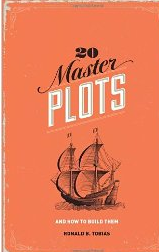
“Story, then, is a chronicle of events. The listener wants to know what comes next. Plot is more than just a chronicle of events. THe listener asks a different question: “WHy does this happen?” Story is a series of events strugn like beads on a string. (This happened and then this happened and then…) Plot is a chain of cause-and-effect relationships that constantly create a pattern of unified action and behavior. Plot involves the reader in the game of “Why?” Story requires only curiosity to know what will happen next. Plot requires the ability to remember what has already happened, to figure out the relationships between events and people, and to try to project the outcome.” (12)
“Andre Gide pointed out that the first condition of art was that it contain nothing unessential.” (25)
“The true comic novel, Anthony Burgess pointed out, was the one that had to do with people’s recognition of their unimportance in the universe.” (36)
“The writer is a slave, not a god. You’re a slave to your characters and to the premise of your story. If you must find a model to represent the status of the author, it would be not as a god but as a referee.” (42)
“If you use your characters to say what you want them to say, you’re writing propaganda. If your characters say waht they want to say, you’re writing fiction.” (43)
“If you think it’s the author’s responsibility to tell the best story possible and not preach, you have little choice but ot present a situation that includes both sides of the argument sympathetically. Only then is your character between a rock and a hard place.” (46)
“As a writer, you aren’t concerned with teaching your reader the “right’ thing to do under these circumstances. You’re concerned with putting the reader in the shoes of your protagonist, making the reader “feel” for Sandy and understand the complexity of her dilemma, so the reader understands that there are no easy solutions and that someone, anyone, who has the misfortune to have this happen would suffer terribly.” (47)
“Mickey Spillane once said, “I have no fans. You know what I got? Customers.”” (117)
“We don’t identify with Judah Ben-Hur as strongly as we identify with the poor slob Rocky. Why not? Because Ben Hur is on a higher emotional and intellectual plane than most of us. We respect what he represents, but he isn’t really one of us. Rock is. He’s heroice in ways we can feel.” (132)
“If you want your reader to feel empathy for your protagonist, make sure that her emotional and/or intellectual plane is equal to or lower than the reader’s. If your reader feels your protagonist is superior, he won’t make the psychic connection. Part of this is vicarious; the reader wants your hero to be like him, at least symbolically. She’s no great genius, she’s a common person – someone your reader can relate to.” (132)
“The more a reader knows about the character, the less the character is a part of the reader’s world and more a part of his own world.” (173)
“You can’t just turn a character around 180 degrees and reverse her attitudes and actions by a simple event. You must show convincingly how the character could get from point A to point Z.” (196)
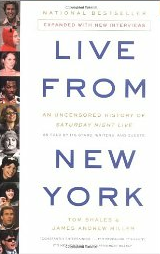
I recently finished reading Live From New York: An Uncensored History of Saturday Night Live by Tom Shales and James Andrew Miller. I highly recommend this interview style book to anyone who’s interested in the show and its history. As usual here’s the quotes I found interesting, but if you like it please buy the book.
Jane Curtin: “In order to do that kind of a show or any kind of a comedy show, you have to have arrogance and you have to have adrenaline.” (54)
Lorne Michaels: “We wanted to redefine comedy the way the Beatles redefined what being a pop star was. That required not pandering, and it also required removing neediness, the need to please. It was like, we’re only going to please those people who are like us. The presumption was there were a lot of people like us. And that turned out to be so.” (79)
Alan Zweibel: “The one rule that we had, if there was a rule, was if we make each other laugh we’ll put it on television and hopefully other people will find it funny and tell their friends. So there was a purity about the intent.” (96)
John Landis: “My secretary came in and she said, “Elvis is dead,” and Michael O’Donoghue said, “Good career move.”” (112)
Andrew Smith: “The first group that came through before me didn’t know how big they were going to be, so they were much freer and much more open and thus, I thought, a lot funnier than the subsequent people.” (206)
Pam Norris: “I’ve sort of learned, in the subsequent twenty years I’ve been in show business, that people just aren’t that clever, and sometimes things that look like clever schemes are just people stumbling over their own feet.” (217)
Tim Kazurinsky: “If you have one line it’s harder than if you have a big part. The confidence erodes week by week, and it can just destroy people. And that was a hard thing to watch.” (244)
Barry Blaustein: “Pretty good rule of thumb: If you’re laughing when you’re writing it, it will be funny.” (250)
Bob Tischler: “Larry David came on, and because of who Larry is – and one thing Larry is is always true to himself – he did not compromise.” (287)
Tom Hanks: “It’s horrifying. And yet it’s the most exhilarating thing, like being strapped inside of a huge explosive rocket ship and you’re waiting for the countdown to go and it just might blow you to kingdom come or it might take you to the moon.” (323)
Carol Leifer: “I remember Lorne really clearly in one meeting saying he always hated the funny-name joke, you know, when a character had a funny name, like a punny name. That kind of thing. It’s such an indicator of an amateur.” (327)
Warren Littlefield: “One of the questions you have to ask yourself is, “all right, kill it, but what’s your plan?” And sometimes faced with “what’s your plan,” you look at it in a different light.” (329)
Lisa Kudrow: “There’ve been a couple things that I didn’t get or got fired from where friends of mine who had a little more experience said, “It’s always a blessing when a door closes, because another door is going to open.” And there’s no such thing as your whole career being decided in one night. I just kept believing that iw as being saved by not doing Saturday Night live to do something else.” (386)
James Downey: “I always thought that if comedy is going to confuse anybody, by rights it should be the stupider people. You shouldn’t be punished for knowing more.” (416)
Norm Macdonald: “I wanted to be a writer and performer. I wasn’t a very good writer and I wasn’t a very good performer, but I could be a writer-performer. And the one place I could do that as SNL, because Lorne was always good with letting writers perform if they were funny.” (434)
Lorne Michaels: “I used to say that you get only so many hours that you can be with someone in a lifetime, and you can kind of use it all up in a very intense four or five years or you can spread it over a lifetime. Friendship really needs distance and space.” (438)
Lorne Michaels: “There’s an old Hebrew proverb that if you have six Jews in a town, you have seven synagogues. And I think it’s about the same with writers.” (450)
Steve Higgins: “If you like everything in the show, then that’s not a good show. If you love every single thing, there’s something wrong.” (451)
Norm Macdonald: “I didn’t care about the audience reaction at all. It would have been fine with me if we’d never rehearsed it and I could just do the jokes that I thought were funny, because I have more faith in me and Jim than I did in any audience. I just like doing jokes I like, and if the audience doesn’t like them, then they’re wrong, not me.” (454)
Don Ohlmeyer: “When Saturday night Live is really good, they do care what the audience thinks. And when Saturday Night Live is not really good, they’re kind of doing it for themselves and their pals.” (455)
Chevy Chase: “I’m just suggesting that that’s a quality that lends itself to being successful, as an “Update” guy and as an actor on Saturday Night Live, which is not caring whether people say you’re good or not, only that you have your integrity, and that you think it’s good.” (455)
Norm Macdonald: “I hate applause. I don’t like an audience applauding because to me that’s like a cheap kind of high… And while you can applaud voluntarily, you can’t laugh voluntarily – you have to laugh involuntarily – so I hate when an audience applauds. I don’t want to say things that an audience will agree with, I don’t want to say anything that an audience already thinks.” (456)
Norm Macdonald: “Lorne had alays told me, “in the show, you have to have an exit strategy.” Which is a way to leave the show in exactly the right way to move on in show business.” (462)
Colin Quinn: “Part of being a comedian is the delusion that you should be onstage at all times. Comedians could watch like Robin Williams and Chris Rock go on and the whole audience go crazy, and the whole time I know what they’re thinking – even the youngest new guys: “I should come to work this crowd. I’m telling you, I could kill right now.” That’s how comedians think.” (464)
Chris Kattan: “until you kind of let it all go, and then you just relax and you’re a better performer.” (481)
Jimmy Fallon: “They’re excited not about writing it, but about what the audience’s reaction will be. It’s kind of exciting that way for the writers. Writing itself is tedious. No one ever really enjoys writing until it’s done.” (502)
Mike Shoemaker: “When you’re a producer your job is talking to people and getting them to do things you want them to do and yet having them feel that it’s their choice and that they’re not being forced.” (530)
Gwyneth Paltrow: “My theory is that you kind of stop growing at the age you are when you become famous.” (548)
Darrell Hammond: “I try to improve myself every week. It’s the only hope I have of making it in show business is to improve. I have to be better than I was. That’s the way I look at it, because i’m not a glamour person.” (549)
James Downey: “If the show is bad, everyone knows instantly that it’s bad. But if it starts to get good again, it seems to take like four years for the word to get around.” (552)
Lorne Michaels: “I’d much rather my life be perceived as glamorous or stylish than as one of an enormous amount of work that is unceasing. It’s a choice. Either you try to make it look easy or you emphasize how hard it is. My dad never complained – and I admired that.” (555)
Craig Kellem: “Lorne just figured out what he wanted to do and somehow his willpower outlasted everybody else’s resistance.” (565)
Jon Stewart: “I think the thing that probably srikes me most is, here’s a guy who clearly doesn’t have to work this hard but still does. And you can only attribute that to either he’s insane or he’s still excited about the show, he still enjoys it, he still has a passion for it, and he still wants it to be good.” (575)
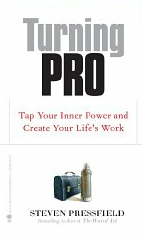
I recently finished reading “Turning Pro” by Steven Pressfield. (See quotes from his other book here.) Here’s the parts I found most interesting, as always if you like the quotes, please buy the full book.
“When we turn pro, we give up a life with which we may have become extremely comfortable. We give up a self that we have come to identify with and to call our own. We may have to give up friends, lovers, even spouses.” L144
“I have come to believe, is the most primal and sacred fundament of our being. To feel ambition and to act upon it is to embrace the unique calling of our souls. Not to act upon that ambition is to turn our backs on ourselves and on the reason for our existence.” L193
“When we’re terrified of embracing our true calling, we’ll pursue a shadow calling instead. That shadow career is a metaphor for our real career. Its shape is similar, its contours feel tantalizingly the same. But a shadow career entails no real risk. If we fail at a shadow career, the consequences are meaningless to us.” L229
“No one is born a pro.” L267
“The difference between an amateur and a professional is in their habits. An amateur has amateur habits. A professional has professional habits.” L318
“We can never free ourselves from habits. The human being is a creature of habit. But we can replace bad habits with good ones.” L320
“Both addict and artist are dealing with the same material, which is the pain of being human and the struggle against self-sabotage. But the addict/amateur and the artist/professional deal with these elements in fundamentally different ways.” L348
“The amateur is an egotist. He takes the material of his personal pain and uses it to draw attention to himself.” L374
“Professionals manipulate them for the good of others.” L379
“They had achieved the kind of peace that comes when you’ve already fallen so far that you don’t have to worry about falling any farther.” L486
“The life we call “normal” isn’t normal at all. A spouse and kids, a mortgage, a 9-to-5 job…who said that was life? What’s so great about working in a factory or a cubicle?” L494
“We’re addicted to failure, we enjoy it. Each time we fail, we are secretly relieved.” L545
“Stanislavsky’s famous three questions: Who am I? Why am I here? What do I want?” L552
“The amateur identifies with his own ego. He believes he is “himself.” That’s why he’s terrified.” L726
“The amateur is a narcissist. He views the world hierarchically. He continuously rates himself in relation to others, becoming self-inflated if his fortunes rise, and desperately anxious if his star should fall.” L727
“Paradoxically, the amateur’s self-inflation prevents him from acting. He takes himself and the consequences of his actions so seriously that he paralyzes himself.” L746
“The amateur believes that, before she can act, she must receive permission from some Omnipotent Other — a lover or spouse, a parent, a boss, a figure of authority. The amateur sits on a stool, like Lana Turner at Schwab’s, waiting to be discovered.” L785
“The payoff of living in the past or the future is you never have to do your work in the present.” L805
“That gang or posse that we imagine is sustaining us by the bonds we share is in fact a conglomeration of individuals who are just as fucked up as we are and just as terrified. Each individual is so caught up in his own bullshit that he doesn’t have two seconds to worry about yours or mine, or to reject or diminish us because of it.” L842
“Habits and qualities that the professional possesses that the amateur doesn’t: 1. The professional shows up every day 2. The professional stays on the job all day 3.The professional is committed over the long haul 4. For the professional, the stakes are high and real Further: 5. The professional is patient 6. The professional seeks order 7. The professional demystifies 8. The professional acts in the face of fear 9. The professional accepts no excuses 10. The professional plays it as it lays 11. The professional is prepared 12. The professional does not show off 13. The professional dedicates himself to mastering technique 14. The professional does not hesitate to ask for help 15. The professional does not take failure or success personally 16. The professional does not identify with his or her instrument 17. The professional endures adversity 18. The professional self-validates 19. The professional reinvents herself 20.The professional is recognized by other professionals.” L1066
“The amateur tweets. The pro works.” L1078
“The professional knows when he has fallen short of his own standards. He will murder his darlings without hesitation, if that’s what it takes to stay true to the goddess and to his own expectations of excellence.” L1091
“Horses understand the whip, but I don’t want a racer that runs that way. A horse that loves to run will beat a horse that’s compelled, every day of the week.” L1103
“Never train your animal to exhaustion. Leave him wanting more.” L1107
“The amateur spends his time in the past and the future. He permits himself to fear and to hope. The professional has taught himself to banish these distractions.” L1110
“The professional does not wait for inspiration; he acts in anticipation of it.” L1129
“In order to achieve “flow,” magic, “the zone,” we start by being common and ordinary and workmanlike.” L1179
“The professional trusts the mystery. He knows that the Muse always delivers. She may surprise us. She may give us something we never expected.” L1322
“Two key tenets for days when Resistance is really strong: 1. Take what you can get and stay patient. The defense may crack late in the game. 2. Play for tomorrow.” L1366
“Our work is a practice. One bad day is nothing to us. Ten bad days are nothing.” L1378
“When we are involved in creativity we feel that we are living more fully than during the rest of life.” (2)
“She could use this luck only because she had been, for years, deeply involved with the small details of the movements of stars. The finding was possible because the astronomer was interested in galaxies for their own sake, not because she wanted to prove a theory or make a name for herself.” (2)
“The many years of tedious calculations are vindicated by the burst of new knowledge. But even without success, creative persons find joy in a job well done. Learning for its own sake is rewarding even if it fails to result in a public discovery.” (5)
“According to this view, creativity results from the interaction of a system composed of three elements: a culture that contains symbolic rules, a person who brings novelty into the symbolic domain, and a field of experts who recognize and validate the innovation.” (6)
“To achieve creativity in an existing domain there must be surplus attention available. This is why such centers of creativity as Greece in the fifth century B.C., Florence in the fifteenth century, and Paris in the nineteenth century ended to be places where wealth allowed individuals to learn and to experiment above and beyond what was necessary for survival.” (8)
“Creative individuals are often considered odd-or even arrogant, selfish, and ruthless. It si important to keep in mind that these are not traits of creative people, but traits that the rest of us attribute to them on the basis of our perceptions. When we meet a person who focuses all of his attention on physics or music and ignores us and forgets our names, we call that person “arrogant” even though he may be extremely humble and friendly if he could only spare attention from his pursuit.” (10)
“It is practically impossible to learn a domain deeply enough to make a change in it without dedicating all of one’s attention to it and thereby appearing to be arrogant, selfish, and ruthless to those who believe they have a right to the creative person’s attention.” (10)
“To have a good life it is not enough to remove what is wrong from it. We also need a positive goal, otherwise why keep going? Creativity is one answer to that question.” (11)
“Productivity consists of NOT doing anything that helps the work of other people but to spend all one’s time on the work the Good Lord has fitted one to do, and to do well.” (14)
“Pessimism is a very easy way out when you’re considering what life really is, because pessimism is a short view of life. If you look at what is happening around us today and what has happened just since you were born, you can’t he but feel that life is a terrible complexity of problems and illnesses of one sort or another. But if you look back a few thousand years, you realize that we have advanced fantastically from the day when the first amoeba crawled out of the slime and made its adventure on land. If you take a long view, I do not see how you can be pessimistic about the future of man or the future of the world.” (19-20)
“In our sample, some individuals were talented in mathematics or in music, but the majority achieved creative results without any exceptional talent being evident.” (27)
“Creativity is any act, idea, or product that changes an existing domain, or that transforms an existing domain into a new one. And the definition of a creative person is: someone whose thoughts or actions change a domain, or establish a new domain.” (28)
“Nuclear physics, microbiology, poetry, and musical composition share few symbols and rules, yet the calling for these different domains is often astonishingly similar. To bring order to experience, to make something that will endure after one’s death, to dos something that allows humankind to go beyond its present powers are very common themes.” (38)
“No person can afford to pay attention to more than a very small fraction of new things produced. Yet a culture could not survive long unless all of its members paid attention to at least a few of the same things. In fact it could be said that a culture exists when the majority of people agree that painting X deserves more attention than paining Y, or idea X deserves more thought than idea Y.” (42)
“I have always looked upon the task of a scientist as bearing the responsibility for persuading his contemporaries of the cogency and validity of his thinking.” (42)
“When we asked creative persons what explains their success, one of the most frequent answers-perhaps the most frequent one-was that they were lucky. Being in the right place at the right time is an almost universal explanation.” (46)
“A good creative person is well trained. So he has first of all an enormous amount of knowledge in that field. Secondly, he tries to combine ideas, because he enjoys writing music or enjoys inventing. And finally, he has the judgment o say, “This is good, I’ll pursue this further.” (50)
“Access to a field is equally important. Some people are terrible knowledgeable but are so unable to communicate with those who matter among their peers that they are ignored or shunned in the formative years of their careers.” (54)
“Someone who is not known and appreciated by the relevant people has a very difficult time accomplishing something that will be seen as creative. Such a person may not have a chance to learn the latest information, may not be given the opportunity to work, and if he or she does manage to accomplish something novel, that novelty is likely to be ignored or ridiculed.” (54)
“You cannot assume the mantle of creativity just by assuming a certain personality style. One can be creative by living like a monk, or by burning the candle at both ends.” (56)
“A creative person is more likely to be both aggressive and cooperative, either at the same time or at different times, depending on the situation. Having a complex personality means being able to express the full range of traits that are potentially present in the human repertoire but usually atrophy because we think that one or the other pole is “good,” whereas the other extreme is “bad.” (57)
“The very orderly person may long to be spontaneous, the submissive person wishes to be dominant. As long as we disown these shadows, we can never be whole or satisfied. Yet that is what we usually do, and so we keep on struggling against ourselves, trying to live up to an image that distorts our true being. A complex personality does not imply neutrality, or the average. It is not some position at the midpoint between two poles. It does not imply, for instance, being wish-washy, so that one is never very competitive or very cooperative. Rather it involves the ability to move from one extreme to the other as the occasion requires.” (57)
“Ten pairs of apparently antithetical traits that are often both present in such individuals and integrate with each other in a dialectical tension: 1. Creative individuals have a great deal of physical energy, but they are also often quiet and at rest. 2. Creative individuals tend to be smart, yet also naïve at the same time. 3. Playfulness and discipline, or responsibility and irresponsibility. 4. Alternate between imagination and fantasy on one end, and a rooted sense of reality at the other. 5. Harbor opposite tendencies on the continuum between extroversion and introversion. 6. Humble and proud at the same time. 7. Creative individuals to a certain etenet escape rigid gender role stereotyping. 8. Rebellious and independent, yet it is impossible to be creative without first having internalized a domain. 9. Very passionate about their work, yet they can be extremely objective about it as well. 10. Openness and sensitivity of creative individuals often exposes them to suffering and pain yet also a great deal of enjoyment.” (58-73)
“The energy is under their control-it is not controlled byt the calendar, the clock, an external schedule. When necessary they can focus it like a laser beam; when it is not, they immediately start recharging their batteries.” (58)
“Studies show rather conclusively that children with very high IQs do well in life, but after a certain point IQ does not seem to be correlated any longer with superior performance in real life.” (59)
“Some people with high IQs get complacent, and, secure in their mental superiority, they lose the curiosity essential o achieving anything new.” (60)
“A certain immaturity, both emotional and mental, can go hand in hand with deepest insights.” (60)
“When I have a job to do like that, where you have to do something that takes a lot of effort, slowly, I pretend I’m in jail.” (62)
“Despite the carefree air that many creative people affect, most of them work late into the night and persist when less driven individuals would not.” (62)
“The whole point of art and science is to go beyond what we now consider real, and create a new reality.” (63)
“Their respect for the domain in which they work makes them aware of the long line of previous contributions to it, which puts their won into perspective. Second, they also are aware of the role that luck played in their own achievements. And third, they are usually so focused on future projects and current challenges that their past accomplishments, no matter how outstanding, are no longer very interesting to them.” (68)
“Elisabeth Noelle-Neumann says: I never think of what I am proud about. I never look back, except to find out about mistakes. Because mistakes are hard to remember and to draw conclusions from. But I only see danger in thinking back about things you are proud of.” (68)
“It is often necessary for creative individuals to be ambitious and aggressive. Yet at the same time, they are often willing to subordinate their own personal comfort and advancement ot the success of whatever project they are working on.” (69)
“One of the most common failures of able people is a lack of nerve. They’ll play safe games.” (72)
“Without passion we soon lose interest in a difficult task. Yet without being objective about it, our work is not very good and lacks credibility.” (72)
“Perhaps the most important quality, the one that is most consistently present in all creative individuals, is the ability to enjoy the process of creation for its own sake.” (75)
“The creative process has traditionally been described as taking five steps. The first is a period of preparation, becoming immersed, consciously or not, in a set of problematic issues that are interesting and arouse curiosity… The second phase is a period of incubation, during which ideas churn around below the threshold of consciousness. It is during this time that unusual connections are likely to be made… The third component of the creative process is insight, sometimes called the “Aha!” moment… The fourth component is evaluation, when the person must decide whether the insight is valuable and worth pursuing… The fifth and last component of the process is elaboration. It is probably the one that takes up the most time and involves the hardest work. This is what Edison was referring to when he saidt hat creativity consists of 1% inspiration and 99% perspiration.” (79-80)
“When we intend to solve a problem consciously, we process information in a linear, logical fashion. But when ideas call to each other on their own, without our leading them down a straight and narrow path, unexpected combinations may come into being.” (79)
“A person who makes a creative contribution never just slogs through the long last stage of elaboration. This part of the process is constantly interrupted by periods of incubation and is punctuated by small epiphanies. Many fresh insights emerge as one is presumably just putting finishing touches on the initial insight.” (80)
“The five stages in reality are not exclusive but typically overlap and recur several times before the process is completed.” (83)
“Suffering is not bad, it helps you very much. Do you know a novel about happiness? Or a film about happy people? We are a perverse race, only suffering interests us.” (84)
“Psychologist Donald Campbell makes the point that the difference between a scholar who comes up with new ideas and one who does not is often a difference in curiosity.” (86)
“Without a burning curiosity, a lively interest, we are unlikely to persevere long to make a significant new contribution.” (87)
“Creative people are ever alert to what colleagues across the fence are doing.” (88)
“When a field becomes too self-referential and cut off from reality, it runs the risk of becoming irrelevant. It is often dissatisfaction with the rigidity of domains that makes great creative advances possible.” (89)
“You cannot transform a domain unless you first thoroughly understand how it works.” (90)
“Learn the craft, then set it aside.” (90)
“The usual IQ tests were not designed to tap originality.” (93)
“When approached with a desire to come up with the best solution, even the most rigidly predefined problems can result in creative outcomes.” (97)
“People who keep themselves busy all the time are generally not creative. So I am not ashamed of being idle.” (99)
“Creative persons all love what they do. It is not the hope of achieving fame or making money that drives them; rather, it is the opportunity to do the work that they enjoy doing.” (107)
“The solution seems to be that those individuals who keep doing creative work are those who succeed in internalizing the field’s criteria of judgment to the extent that they can give feedback to themselves, without having to wait to hear from experts.” (116)
“Everyone has both bad and good ideas all the time, they say. But some people can’t tell them apart until it’s too late, until they have already invested a great deal of time in the unprofitable hunches.” (116)
“The more ambitious the task, the longer it takes to lose oneself in it, and the easier it is to get distracted.” (120)
“Let fame be something that you accept graciously if you ever get it, but make sure that it is a career that you can enjoy. That requires intrinsic motivation.” (122)
“Some became comfortably wealthy from their inventions or their books, but none of them felt fortunate because of it. What they felt fortunate about was that they could get paid for something they had such fun doing and that in the bargain they could feel that what they did might help the human condition along. It is indeed lucky to be able to justify one’s life activity.” (123)
“When we are in flow, we do not usually feel happy – for the simple reason that in flow we feel only what is relevant to the activity. Happiness is a distraction.” (123)
“It is only after we get out of flow, at the end of a session or in moments of distraction within it, that we might indulge in feeling happy. And then there is the rush of well-being, of satisfaction that comes when the poem is completed or the theorem is proved. In the long run, the more flow we experience in daily life, the more likely we are to feel happy overall.” (123)
“The place where one works is important because… one must be in a position to access the domain in which one plans to work. Information is not distributed evenly in space but is clumped in different geographical nodes… The second reason is that novel stimulation is not evenly distributed. Certain environments have a greater density of interaction and provide more excitement and a greater effervescence of ideas; therefore, they prompt the person who is already inclined to break away from conventions to experiment with novelty more readily than if he or she had stayed in a more conservative, more repressive setting.” (128-129)
“When persons with prepared minds find themselves in beautiful settings, they are more likely to find new connections among ideas, new perspectives on issues they are dealing with.” (136)
“When ordinary people are signaled with an electronic pager at random times of the day and asked to rate how creative they feel, they tend to report the highest level of creativity when walking, driving, or swimming; in other words, when involved in a semiautomatic activity that takes up a certain amount of attention, while leaving some of it free to make connections among ideas below the threshold of conscious intentionality. Devoting full attention to a problem is not the best recipe for having creative thoughts. When we think intentionally, thoughts are forced to follow a linear, logical – hence predictable – direction. But when attention is focused on the view during a walk, part of the brain is left free to pursue associations that normally are not made.” (138)
“What allows certain individuals to make memorable contributions to the culture is a personal resolution to shape their lives to suit their own goals instead of letting external forces rule their destiny.” (152)
“It is impossible to tell whether a child will be creative or not by basing one’s judgment on his or her early talents.” (155)
“Practically every individual who has made a novel contribution to a domain remembers feeling awe about the mysteries of life and has rich anecdotes to tell about efforts to solve them.” (156) “Sometimes the only contribution of the parents to their child’s intellectual development is treating him or her like a fellow adult.” (161)
“Even though a child need not develop an early interest in a domain in order to become creative in it later, it does help a great deal to become exposed early to the wealth and variety of life.” (153)
“An astonishing number said that one of the main reasons they had become successful was because they were truthful or honest.” (166)
“Creative individuals seem to have had either exceptionally supportive childhoods or very deprived and challenging ones. What appears to be missing is the vast middle ground.” (170)
“It helps to be born in a family where intellectual behavior is practiced, or in a family that values education as an avenue of mobility – but not in a family that is comfortably middle class.” (172)
“It is possible that the reason our successful creative adults remember their childhoods as basically warm sit hat they are successful. In order to be consistent with the present, their memory privileges positive past events.” (173)
“It is quite strange how little effect school – even high school – seems to have had on the lives of creative people. Often one sense that, if anything, school threatened to extinguish the interest and curiosity that the child had discovered outside its walls.” (173)
“To keep up interest in a subject, a teenager has to enjoy working in it. If the teacher makes the task of learning excessively difficult, the student will feel too frustrated and anxious to really get into it and enjoy it for its own sake. If the teacher makes learning too easy the student will get bored and lose interest. The teacher has the difficult task of finding the right balance between the challenges he or she gives and the students’ skills, so that enjoyment and the desire to learn more result.” (175)
“What is astonishing is the great variety of paths that led to eminence.” (181)
“Instead of being shaped by events, they shaped events to suit their purposes.” (181)
“Presumably many children who started out with talents equal or superior to those of the ones we met in this group feel by the wayside either because they lacked resolve or because the conditions they encountered were too harsh.” (181)
“A creative life is still determined – but what determines it is a will moving across time – the fierce determination to succeed, to make sense of the world, to sue whatever means to unravel some of the mysteries of the universe.” (182)
“She was probably smarter than I was, but she didn’t have the same drive.” (185)
“Curiosity and drive are in many ways the yin and the yang that need to be combined in order to achieve something new. The first requires openness to outside stimuli, the second inner focus. The first is playful, the second serious; the first deals with objects and ideas for their own sake, the second is competitive and achievement oriented. Both are required for creativity to become actualized. “ (185)
“The majority of the people we interviewed mentioned luck most frequently as the reason they had been successful. Being in the right place at the right time and meeting the right people are almost necessary to take off within a field. And unless one becomes visible in a field, it is very difficult to make a creative contribution to it.” (186)
“The individuals in our sample had, as a rule, stable and satisfying marital relationships. Some of those in the arts started out having a vigorous and varied sex life, but most of them married early and stayed married to their spouses for thirty, forty, or more than fifty years.” (187)
“Creative individuals usually are forced to invent the jobs they will be doing all through their lives.” (193)
“Creative individuals don’t have careers; they create them.” (193)
“Each poet, musician, or artist who leaves a mark must find a way to write, compose, or paint like no one has done before. So while the role of artists is an old one, the substance of what they do is unprecedented.” (193)
“A new way of doing things is discovered because the person is always open to new learning and has the drive to carry through the new idea that emerges from that learning.” (197)
“The majority of people in every culture invest their lives in projects that are defined by their society. They pay attention to what others pay attention to they experience what others experience. They go to school and learn what should be learned; they work at whatever job is available; they marry and have children according to the local customs… At the same time, a culture can evolve only if there are a few souls who do not play by the usual rules. The men and women we studied made up their rules as they went along, combing luck with the singleness of their purpose, until they were able to fashion a “life theme” that expressed their unique vision while also allowing them to make a living.” (208)
“Vera Rubin: It wasn’t that I was able to persevere. I was unable to stop! I just couldn’t give it up, it was just too important. It just never entered the realm of possibility. But I never was sure, really sure, that it was going to work.” (217)
“There was very little reminiscing and dwelling on past success in this group; everyone’s energies were focused on tasks still to be accomplished.” (221)
“For most of them work is not a way to avoid a full life, but rather is what makes a life full.” (224)
“If we live long enough and if we resolve all the earlier tasks of adulthood – such as developing a viable identity, a close and satisfying intimacy, and if we succeed in passing on our genes and our values through generativity – then there is a last remaining task that is essential for our full development as a human being. This consists in bringing together into a meaningful story our past and present, and in reconciling ourselves with the approaching end of life. If in the later years we look back with puzzlement and regret, unable to accept the choices we have made and wishing for another chance, despair is the likely outcome.” (224-225)
“It sounds almost as if the family matters primarily because it enables the writer to concentrate all his energies on his task.” (226)
“Mark Strand: We might have come along so that the universe could look at itself. I don’t know that, but we’re made of the same stuff that stars are made of, or that floats around in space. But we’re combined in such a way that we can describe what it’s like to be alive, to be witnesses.” (231)
“Strand’s modus operandi seems to consist of a constant alternation between a highly concentrated critical assessment and a relaxed, receptive, nonjudgmental openness to experience.” (242)
“When painful experience is put into words, the poet is relieved of some of her burden.” (245)
“Naivete is such a great help for long-term success in the arts. Instead of wasting time hatching plots and counterplots, it allows the focusing of every ounce of energy on painting or writing.” (246)
“Like most individuals in our sample, she showed her creativity first of all by being able to turn a disadvantage into an advantage.” (254)
“Television commercials give such a strange view of what life is supposed to be. And a lot of people buy it. Life is not easy and comfortable, with nothing ever going wrong as long as you buy the right product. It’s not true that if you have the right insurance everything is going to be fine. That’s not what it’s really like. Terrible things happen. And those are the things that we learn from.” (255)
“One of most exciting opportunities in being a writer is to take a villain or criminal character and make him human by showing what caused him to be so.” (261)
“One must keep the mind focused on two contradictory goals: not to miss the message whispered by the unconscious and at the same time force it into a suitable form.” (263)
“Working on several projects at once is a common pattern among creative individuals; it keeps them from getting bored or stymied, and it produces unexpected cross-fertilization of ideas.” (272)
“This tendency to take one’s dreams and hunches seriously and to see patterns where others see meaningless confusion is clearly one of the most important traits that separates creative individuals from otherwise equally competent peers.” (288)
“They are selfless and egocentric at the same time, eager to cooperate yet insistent on being in control. They call themselves workaholics, are extremely perseverant, and stubborn when thwarted. They have all taken risks and have defied the dogmas of their fields.” (288)
“When knowledge within separate domains is pursued without understanding how its applications affect the whole, it unleashes forces that can be enormously destructive.” (293)
“She reevaluated her priorities and decided that it wasn’t important to get credit for what she had been doing, it wasn’t important for her to get anywhere. What mattered was to do the best she could and enjoy it while it lasted, without getting all ego-involved with success. This decision has given her so much peace of mind that now she is busier than before without feeling any stress or pain.” (304)
“We all have much deeper reserves than we know we have and that generally it takes an outside challenge or opportunity to make us aware of what we can actually do. A lot of our potential, he believes, is buried, hidden, imprisoned by fears, low self-esteem, and the hold of convention.” (313)
“Survival no longer depends on biological equipment alone but on the social and cultural tools we choose to use.” (318)
“The more well-off we become, the less reason we have to look for change, and hence the more exposed we are to outside forces. The result of creativity is often its own negation.” (321)
“Each field expects society to recognize its autonomy, yet each feels in the last analysis accountable only to itself, according ot the rules of its own domain.” (324)
“It is useless to expect fields to monitor their own creative ideas in terms of the long-range public good.” (324)
“Mass-produced commodities are especially vulnerable to being chosen on the basis of short-term benefits.” (324)
“The culture that survives to direct the future of the planet will be one that encourages as much creativity as possible but also finds way to choose novelty on the basis of the future well-being of the whole, not just of the separate fields.” (325)
“it is impossible to argue that one must have a certain kind of family background in order to become creative. But there definitely seems to be an increased likelihood that bimodal early experience is related to later creativity.” (327)
“While specializing in a particular domain can wait until late adolescence, an intense involvement in some domain might be necessary if a person is to become creative.” (329)
“It is important to keep in mind that most breakthroughs are based on linking information that usually is not thought of as related.” (329)
“We should realize that a certain amount of hardship, of challenge, might have a positive effect on their motivation.” (332)
“At some point in their careers, potentially creative young people have to be recognized by an older member of the field. If this does not happen, it is likely that motivation will erode with time, and the younger person will not get the training and the opportunities necessary to make a contribution. The mentor’s main role is to validate the identity of the younger person and to encourage him or her to continue working in the domain.” (332)
“In one of the most high-powered research institutes in the country, where many a Nobel Prize was won, there used to be an associate director whose main job was to pay a daily visit to each scientist’s lab and marvel at his or her latest accomplishments – even though he often had little idea what they were.” (335)
“A pat on the back does wonders for creative productivity.” (335)
“Better training, higher expectations, more accurate recognition, a greater availability of opportunities, and stronger rewards are among the conditions that facilitate the production and the assimilation of potentially useful new ideas.” (336)
“There are four major obstacles that prevent many from expressing this potential: Some of us are exhausted by too many demands, and so have trouble getting hold of and activating our psychic energy in the first place. Or we get easily distracted and have trouble learning how to protect and channel whatever energy we have. The next problem is laziness, or lacking discipline for controlling the flow of energy. And finally, the last obstacle is not knowing what to do with the energy one has.” (344)
“There are real limits to how many things a person can attend to at the same time, and when survival needs require all of one’s attention, none is left over for being creative.” (345)
“With age most of us lose the sense of wonder, the feeling of awe in confronting the majesty and variety of the world. Yet without awe life becomes routine. Creative individuals are childlike in that their curiosity remains fresh even at ninety years of age; they delight in the strange and the unknown. And because there is no end to the unknown, their delight also is endless.” (346)
“Be open to what the world is telling you. Life is nothing more than a stream of experiences – the more widely and deeply you swim in it, the richer your life will be. “ (347)
“Try to surprise at least one person every day.” (347)
“When there is nothing specific to do, our thoughts soon return to the most predictable state, which is randomness or confusion.” (348)
“Wake up in the morning with a specific goal to look forward to.” (349)
“They believe that there is something meaningful to accomplish each day, and they can’t wait to get started on it.” (349)
“Eventually most of the day should consist of tasks you look forward to, until you feel that getting up in the morning is a privilege, not a chore.” (349)
“The more activities that we do with excellence and style, the more of life becomes intrinsically rewarding.” (349)
“To keep enjoying something, you need to increase its complexity.” (350)
“The important thing to remember is that creative energy, like other form of psychic energy, only works over time. It takes a certain minimum amount of time to write a sonnet or to invent a new machine. People vary in the speed they work – Mozart wrote concerti much faster than Beethoven did – but even Mozart could not escape the tyranny of time. Therefore, every hour saved from drudgery and routine is an hour added to creativity.” (353)
“Make time for reflection and relaxation.” (353)
“Conclusions will emerge in your consciousness anyway – and the less you try to direct the process the more creative they are likely to be.” (354)
“Creative individuals usually sleep longer and claim that if they cut down on sleep time the originality of their ideas suffers.” (354)
“What really matters, in the last account, is not whether your name has been attached to a recognized discovery, but whether you have lived a full and creative life.” (372)