1m53s They’re not fully listening by this point, I should talk to them a little bit
7m27s If I’m gonna ask about it, then I need to make a Catholic joke right after that
8m34s More emphasis on “without”
9m22s No need to explain the Wikipedia part, especially after a laugh
Part 2
httpv://www.youtube.com/watch?v=XtMGN6WRjTs
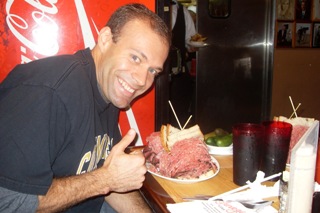
0m28s Say “and here’s a picture of me taking a picture of…”
1m36s Pick which word to emphasize more consistently
2m00s Don’t do the fast stuff in the middle of the joke, only do it at the end
2m38s End this stronger
3m18s I should’ve noticed the crowd liked the dirtier jokes earlier in the set
4m01s Go back to “this week” instead of “since Tuesday”
Overall: I did some old stuff and some new stuff, it wasn’t great, but it wasn’t terrible either, especially given the crowd size. The sand joke needs some work.
1m26s Set this up more, half a sentence isn’t enough, maybe personalize it
2m37s The pacing is off
3m32s Gotta end it on the fast “blurry blurry blark” stuff
Overall: The sand joke needs some work and some tightening but it will be really good in two months. The Netflix joke also needs some tightening, but the first part of it is pretty solid.
Today I’m interviewing Keith Alberstadt. Keith is originally from Nashville, TN the home of the mighty VanderbiltCommodores and is a professional stand-up comedian and writer living in New York City. He’s been seen on the Late Show with David Letterman and is a contributing writer for Saturday Night Live’s Weekend Update. Read more at KeithComedy.com.
1. How are you using the internet / social media to promote your career?
I tried to use my website as much as possible. I use a service called Constant Contact to send monthly newsletters out to my 1500 subscribers. Also, every week I send out an email to my subscribers who live in whatever city I’m performing in that week. My subscribers are categorized by city, and I email them saying “I’ll be in your town.” I still do Facebook but I’m trying to push people to my website since I paid money for that and not for Facebook.
2. Have you noticed the payoff yet?
I get referrals, people forward my email to their friends. Their friends come to the show with them. It helps expand your fan base. Facebook, everyone is doing it. So I wanna do something unique in terms of promoting. This is my website, this is me.
3. You’ve been writing one to five topical insight columns per month, how did that idea come about? Do you find a weekly posting format best?
The idea came about when a good friend of mine, who runs my website, suggested it. My buddy Justin said, “Hey you should write more.” He knows I want to get a writing job in New York and I wasn’t exactly prolific with that kind of material. So he suggested I start writing a weekly topical joke. And the more I got involved with writing, National Lampoon, SNL, Fallon, the more I was able to compile a list every week of stuff I was submitting to those guys. It’s beneficial just to get the practice. The more you do it, the easier it comes. It’s still not easy but you know how to do it better.
They’re definitely better sellers after shows. It’s an impulse buy and I’m in charge of the sales pitch at my show. So after people watch me for 40 min, I spend a couple of minutes telling them about the CD and then I close the show. So as I’m walking out, it’s in their head, its fresh. Online, it’s a different animal. A lot of time, people will take my website card with the promise of “we’ll get it later” and they hardly ever do. Cause they forget about it or the impulse goes away. It’s actually cheaper online than live, but it’s better live. Plus they have a few drinks in them.
5. You’ve been doing standup for over a decade, how has it changed because of technology?
There’s been huge differences. The main one is getting in touch with your fans. It’s easier to promote shows but it’s also a saturated market. Everyone is promoting shows now. The difficult thing now is to find a niche.
It’s also an easier way to keep up with comedians, not just personally, but watching clips online and building the camaraderie. And policing each other, if I see somebody on the road doing my buddy’s joke, it’s easier not only to contact my buddy, but to police ourselves. Because the joke stealing comic is gonna be outted online and blackballed a lot easier than ten years ago, and that’s now more of a deterrent.
6. What do you think about posting videos of your show online?
I have different opinions about that. I want people to get a taste of what I’m about, not just bookers but potential ticket buyers. But at the same time, I don’t wanna share too much. I want them to come to the show. I don’t want an online entity of people staying home and watching it. But it’s a great way to spread the word. What I’m worried about is people filming at shows and posting themselves. I’m gonna predict right now, Keith Alberstadt 2010, there’s gonna be a Supreme Court case for freedom of speech involving videos on the internet. Someone films something at a show, posts it online, and it’s gonna be a big issue, I think.
7. How do you think digital tools will change comedy?
I think you’re gonna see more of an emphasis on digital shorts, people making their own sitcoms online. Gaining an internet presence through YouTube channels. Humorists writing blogs online and building a fan base that way, which is already happening now. Stand up might take a little bit of a hit, because more comics start filming their own shit, putting it online. When it comes to being a stand up, there’s only one category in that whole umbrella, regardless of who they are.
8. How much information do you tend to share on the social networks?
I’ve got two Facebook pages, one for comedy and one for my personal. Every now and then they overlap, like if I’m raising money for something, like the Nashville Flood Benefit, I’ll post it to both. I don’t share anything that’s too personal. I think that’s dangerous. Then you get stalkers and psychokillers. Unless she’s really cute, then I’ll tell her whatever she wants.
9. What’s your weirdest online experience involving your comedy career?
Somebody did a joke on Last Comic Standing that was similar to mine, and then, I didn’t know what to do about it. Thenall of a sudden the NBC message board was blowing up. People who knew me, had seen my show, where calling this guy out. And the guy’s friends were saying it was coincidental. They’d been posting comments on that board for a week before I heard about it. I told people to chill out and I contacted the guy and we talked it out. It was weird to see so many people in my corner who I didn’t even know, I was like, “Wow I guess I have a bigger impact than I thought.”
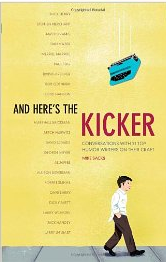
I recently finished a great comedy book, “And Here’s The Kicker: Conversations with 21 Top Humor Writers On Their Craft” by Mike Sacks. I got a ton of useful quotes from it, and this is the last of four parts. I recommend buying the whole book, as there is a lot of insight inside. Since the book is interview style based, I’ve put the writer’s name above all of the quotes that are attributed to him.
DAVID MINER
“The best representative is the one that finds you, not the other way around. This is because he or she (no matter how high up the food chain) was excited by your work.” (180)
“Unsolicited e-mail may as well be spam. Send a letter in an envelope. If it’s not worth a first class stamp to you, it’s not worth thirty seconds to me.” (180)
“Ask a represented writer friend for a reference. References from clients are the ones we take most seriously.” (181)
“If you are just starting out, go along with the enthusiasm of the representative that is interested in working with you – no matter what his or her title. All that matters is that he or she believes in you.” (181)
DAVID SEDARIS
“This first writing teacher had suggested that I got to graduate school. But something inside me though, No, it’s better that I just start writing. That’s sort of my job as a writer, isn’t it? Just to write?” (184)
“I get up, I go right to work, I take a break, and then I go back to work at night. I don’t just sit at a desk for two minutes and then say, “oh, okay. I tried. Maybe tomorrow.” (196)
“You can’t teach a lot of things. That’s the scam of any kind of art school. There are a lot of people who excel in school, but once they don’t have homework anymore, whether it’s painting or writing or whatever, they can’t function. They need a professor telling them to write a story by such and such a date. In the real world, the most important part is sitting there and writing. It’s not easy to function in that vacuum, but that’s what you have to do.” (196)
GEORGE MEYER
“You have to be willing to look stupid, to stumble down unproductive paths, and to endure bad afternoons when all your ideas are flat and sterile and derivative. If you don’t take yourself too seriously, you’ll bounce back from these lulls and be ready for the muse’s next visit.” (208)
“You can’t keep bitch slapping your creativity, or it’ll run away and find a new pimp.” (208)
“Most TV shows are exhausting. The network figures out how many shows will literally kill the staff. Then they do one fewer.” (211)
“If I could eliminate either advertising or nuclear weapons, I would choose advertising.” (212)
“We’re not aiming for consistency. We’re not making screws; we’re trying to innovate and keep a step ahead.” (212)
“The season is long and punishing. Sometimes you ring the bell; sometimes it falls on your head.” (212)
“Experience as much as you can and absorb a lot of reality. Otherwise, your writing will have the force of a Wiffle ball.” (213)
ALLISON SILVERMAN
“A lot of comedy is about status shifts, and I would mark down whenever a shift would occur.” (235)
“It’s very important for any host or performer to not battle an audience but, rather, to become partners with them. As soon as you look needy or uncomfortable, the audience becomes worried and stops laughing – which is a big problem. Going out onstage and thinking of the audience as an enemy only makes you look more needy.” (237)
“It can be that way with a career too. There are a lot of times when your biggest task is just to stay calm and keep working.” (243)
ROBERT SMIGEL
“Downey once summed up SNL sketches this way: actors love to act in sketches about a crazy person in a normal situation, and writers love to write sketches about normal people in a crazy situation.” (251)
“Letterman, Steve Martin, Kaufman and Larry David, these guys were every bit as smart and extreme and inventive as any performer or writer who cultivated a reputation as being too cool for the masses. But they were just so brilliant and smart that they figured out a way to do what they wanted to do on network TV.” (253)
“You don’t necessarily need an academic education. What’s just as important, is to be self-educated – to read and soak in as much as you can from the world at large. Del Close once said, “The more you know about, the more you can joke about.” And he had funnier heroin material than I’ve ever had.” (260)
“It’s a cruel profession where there will probably never be enough work for people who are truly funny.” (261)
“If you think you have some talent, just try to find opportunities. Find like-minded people and keep writing. If you’re good and maybe lucky, it’ll probably work out. And you won’t hate yourself for not trying. Just have something to fall back on.” (261)
DAVE BARRY
“What you’re basically saying in a humor column is: I’m funny because you laugh. But that doesn’t put you above anybody. Pomposity or authority doesn’t work very well with humor.” (274)
“A sense of humor is a measurement of the extent to which we realize that we are trapped in a world almost totally devoid of reason. Laughter is how we express the anxiety we feel at this knowledge.” (275)
DICK CAVETT
“To succeed as a comedy writer, you have to be able to write in different comics’ voices.” (284)
“It’s essential to hear the comics in your head when you write jokes for them. If you can’t do that, you’ll never make it as a comedy writer.” (284)
“In some ways, the life of a stand-up was better than the life of a writer. You could affirm that a joke was funny right away. You didn’t get that sitting in front of a typewriter.” (285)
DAN CLOWES
“I receive letters from young writers asking for advice about a “career” in comics. If somebody asks me, I always say not to do it unless you can’t not do it. If you need encouragement from a stranger, then you shouldn’t do it.” (291)
LARRY WILMORE
“One of the reasons why comedy has fallen out of favor – too many writers aren’t writing about anything that anyone cares about. It’s all pop-culture references.” (296)
“If you score in the beginning, you’re gold. You can just recite your act in a monotone and it’ll still kill. That’s the key: the first thirty seconds in front of a tough crowd are very important.” (297)
“Dominance is very important. Jerry Seinfeld once said, “To laugh is to be dominated.” (297)
“Never listen to execs. Just do your own thing. Whether it happens or doesn’t happen, at least you did what you wanted and you tried. That’s what writers have to get into their heads – no matter what you come up with, it won’t ever be as bad as the executives’ suggestions.” (300)
“You can’t please everyone. You just try to do what you think is funny. If you attempt to appease advocacy groups, good luck. You can do it, I suppose, but it’s not going to be funny.” (302)
“”Breaking the story” means getting the skeleton of it down on paper. Once you have that structure, you can work from it. It’s always easier to have that framework ready as soon as possible.” (305)
“I didn’t care about the jokes so much as the story. The jokes are always the easiest to produce.” (305)
“These are just jokes. You can always come up with more later. Never become too attached to what you write; otherwise, you’ll never survive as a TV comedy writer.” (306)
“I look for a unique voice – maybe something I haven’t quite read before in terms of style and imagery. I can point out pretty quickly if this writer has a different point of view. Mediocrity is pretty easy for me to sniff out. Try to write from your experience. Try not to be derivative, like so many writers can be with references to pop culture. Investigate your own life.” (307)
“Beyond that, only do comedy if you love to do it. I love comedy, and I love to make people laugh, I truly respect the people who came before me and who did it well. It’s important to know your history – if only to know what you shouldn’t be writing.” (307)
JACK HANDEY
“Steve Martin’s sensibility appeals to smart people and dumb people alike. That, to me, is the best comedy.” (311)
“If there’s one thing I learned about TV comedy, it’s that people don’t like sketch comedy in prime time.” (314)
“Aggressive, dark comedy, when it works, is really the best.” (315)
“It can take months or even years for an idea to click. I am usually suspicious of any idea of mine that I love right away.” (318)
“The jokes don’t usually change, but which jokes are used can change. That’s often how I can tell how good a premise it is – how easily the jokes come.” (318)
LARRY GELBART
“While confidence is always a comfort, risk provides a good deal more adrenaline.” (322)
“The problem with Sid was that he was at the mercy of the decision makers, the network people, who – yes, they respect talent, but they respect numbers a good deal more. If you don’t cut it – if your time slot’s not paying the rent – it doesn’t matter how gifted you are. They would have canceled Michelangelo if no one came to the Sistine Chapel.” (330)
“When you’re writing and come to a rough spot and the ideas just aren’t flowing, put down dummy text and keep on moving – especially if it’s at the end of the day and you’re going to stop. Your brain will never stop for the day, even if you have stopped working, and there’s a very good chance you’ll come up with something better. Also, at the very least, you’ll have something to come back to the next day, instead of a blank page. That’s important.” (335)
I recently finished a great comedy book, “And Here’s The Kicker: Conversations with 21 Top Humor Writers On Their Craft” by Mike Sacks. I got a ton of useful quotes from it, so this is part three in a rather long series of posts. I recommend buying the whole book, as there is a lot of insight inside. Since the book is interview style based, I’ve put the writer’s name above all of the quotes that are attributed to him.
IRVING BRECHER
“I didn’t even think about it, really. I just thought they were funny. I didn’t know any better.” (109)
“The circus is funny on its own. And when you throw in more funny, it becomes too much. You need a solid framework.” (112)
Q: So the Marx Brothers films were shown to audiences and then tweaked in the editing room? “No, not the films. The brothers would travel around the country performing the script live.” (113)
“I don’t believe that you can teach anybody to be a top comedy writer. If anything, you have to teach yourself.” (115)
“I would say that if you think you’re funny, then do it. As long as people genuinely respond to what you produce, keep at it. If their laughs seem genuine, keep writing. And don’t stop. Never stop.” (117)
BOB ODENKIRK
“We would ask ourselves about every sketch, “Is it funny? Really, truly funny? Or do we just think it’s funny because we really want it to be funny?” That doesn’t sound very scientific, but I think there’s an important truth there. We took this very seriously. It was very, very important to us. Second: What is this sketch about? That was a little challenging sometimes, because we’d have an idea that seemed funny, but the sketch didn’t really have anything to say.” (122)
“When writers would pitch ideas at meetings, I would talk at length about every idea. Because when you shit on a writer’s idea quickly, they either clam up or they pitch ideas just for the sake of pitching them and just to sort of waste time. They know everything is going to get shit on, and they’re more apt to pitch something that even they don’t believe in. so you get this list of shitty pitches that are being bandied about.” (125)
“My feeling was “Brian, you are a funny guy. You wrote this because you saw something funny here. What is it? What was funny to you? Because if we can all understand why you thought it was funny, then maybe we can make it great, or maybe we can all agree that it is not very good. But you didn’t intentionally just write a piece of shit.” (126)
“Then people get older, and they just don’t want to hear a new idea. They want to sit back and watch the same people do the same thing they did last week. That’s what TV exists for – it exists to be a mild sedative.” (129)
“Robert Smigel used to talk about finding the core joke of your sketch, which was something that struck me as a great lesson and one of the first things that a writer should think about when it comes to sketch comedy.” (132)
TODD HANSON
“How many people can say that something like that happened to them? That they and their friends have this little group in which they did this little fun thing together and then it ended up becoming internationally respected? Most people go through their entire lives without ever having anything like this happen. They get married, they have kids, they grow old, and they die. And nothing like this ever happens to them. But it happened to me. That’s amazing. What are the chances it’s going to happen twice? I’m going to go out on a limb and say probably zero. But don’t get me wrong. I still complain every day.” (137)
“I don’t think there is any point in making a joke that is not an honest joke.” (138)
“Everyone on the staff felt that it was just something to do where we would feel less like we were wasting our lives. Nobody ever had a goal of getting paid, let alone thinking we were going ot become media figures or have our work read all over the world. It was just something you did two nights a week when your shift ended.” (139)
“I don’t care if we are outside of the mainstream – I prefer it that way.” (140)
“People will often ask, “How do I get a job writing comedy?” And I just … it just annoys the fuck out of me. I always answer: “You do it for free for ten years and then, if you are really lucky, you get to write humor as a full-time job.” And they look at me like, “That’s not what I want to do.” (140)
Q: Any advice for those readers who dream of writing for The Onion? “Start your own paper. Do your own thing. That’s what I would recommend to anybody who wants to do anything, not just write for The Onion. Do it for free and have fun. Whether it’s writing comedy or making music or painting or performing interpretive dance. If you want to do something creative, you should have a better reason for wanting to do it than to make money. If you want to make money, my advice is to sell shoes or go into banking.” (141)
“Comedy is extremely hard. It’s not just like, “this is so great!” It’s a hell of a grind.” (141)
“Mark Twain said, “The secret source of humor itself is not joy but sorrow.” He also said, “There is no humor in heaven.” (147)
BEN KARLIN
“Three things are needed to be successful in comedy, but I think it applies to almost everything. First, you need natural talent. Second, you need skill development. Third, you need ambition. Everyone’s ratio is different, but the most successful people have all of them.” (147)
MARSHALL BRICKMAN
“TV’s a monster. It just eats up material. It’s impossible to be continuously good. That’s why I’m amazed when I see a TV show that’s good consistently, night after night, week after week.” (151)
“I’ve always thought that television exists for the audience as a kind of parental entity. If it’s on TV, then it’s been certified by someone, somewhere. And if Johnny did a joke about Nixon or the mayor or whomever – then it became oaky to do jokes about that person.” (151)
“It’s easy to write for someone who’s already established a persona.” (152)
“It’s the hardest thing to develop a persona. That’s why movies and plays about fictional comedians are almost never truly convincing. Because it takes years for the audience to help a comedian shape a comedic persona.” (152)
“Developing a comic character requires a collaboration with the audience. It’s the only way you can do it. You have to get out there and do a variety of material. Over time, certain things, statistically, will continue to work, and other things will drop away, and the audience will tell you what seems correct for you – for what you project onstage as a personality.” (153)
“A lot of material was taken out because the audience just doesn’t care how clever the authors are. They only want a good story. And they’re right.” (155)
“After watching it, we thought, “Where’s the relationship?” When people come to me with ideas, sometimes they say, “I want to do a story about a war” or “I want to do a story about a hospital.” And I’ll always say, “Tell me the story in terms of a relationship.” (157)
“It’s a mistake to think that what you’re seeing up on the stage or on the screen is what the author intended. It isn’t. it’s always the result of a hundred compromises and accidents, both good and bad, and if you’re lucky, you get lucky.” (158)
“The great rule I learned from Woody is that when you get in a room with another person, you’re both responsible for the result – assuming that there’s a reasonably equal level of talent.” (159)
“Even though a great line or idea might be uttered by one person, it may have been triggered or stimulated by what the other party said.” (159)
“What I like to do is to turn ninety degrees from something that’s headed towards sentimental and undercut it.” (161)
MITCH HURWITZ
“I put in “call forwards,’ which were new for me. I inserted hints of events that hadn’t happened yet. And, of course, there’s no way you can get laughs out of that.” (170)
“I’m sure there are many great comic voices who really don’t quite understand what they’re doing – who are just true originals. But the rest of us tend to understand what already exists and then try to go further with it.” (173)
“In any creative endeavor, there needs to be progression. If there is no progression – no innovation – you’re finished.” (173)
“One of the key ingredients with humor is surprise.” (176)
“The system behind TV development is designed to fail. If you, as a producer, jump through all the hoops that the network asks you to jump through, the show probably won’t work. If you look at the success of the best shows, almost all are a result of someone breaking the rules.” (177)