0m46s Take a half second pause between “in a relationship” and “Igor”
1m09s Make a face for “Igor loves this” to help the laugh
1m52s I decided to ignore the random yell as I already addressed crowd work and this was at the end of a setup
3m59s No need to say “that was it”
4m12s Eating the audience’s fries is evidence I’m getting more comfortable on stage
4m54s For the Igor likes this call back, try it without the special voice
5m55s I’m not talking in my regular voice, I should sound sadder about this
7m55s If that gets interrupted again, I should say “that means” instead of “therefore”
8m02s Pause between “go to” and “high school”
8m33s Pause for a second after “Igor loves this” to see if it gets a laugh before leaving
Overall: I was getting small laughs throughout and that’s not good enough. My voice was not conversational for a lot of the jokes and that affected the laughter. On the bright side, I enjoyed eating the audience’s fries.
This is the midnight show, I’m on around 130 in the morning and I had to set the camera up in the sound booth because there were people sitting all the way in the back
httpv://www.youtube.com/watch?v=mmFSemm4KXo
0m12s The MC talked about me dropping out of grad school as my 20 second intro
0m44s I could’ve done the facial expression better
1m26s The “foooood” line needs to go
1m51s Not sure why those two lines didn’t hit
3m45s Interesting one person applause break
4m40s This is the first time I’ve sung on stage, there’s a reason I didn’t start sooner, and it’s the same reason I stopped after half a second
4m57s I’ve been having good improvised responses lately
5m17s Talk way slower about standards dropping for the midnight kiss
5m27s No need for a special voice for “who is that stunning creature in the corner?”
6m03s I’m excited that get some applause
6m23s They started dropping checks
7m28s I thought that was funny
Overall: I think I did a little better than it sounds because of where the camera was positioned. It’s a good and bad sign that 3 of my 4 biggest laughs were on improvised material. It’s good in that I’m getting funnier in the moment but bad that I’m still learning how to make my jokes seem like I just came up with them instead of them being rehearsed.
1m02s Pause for another half second before “Igor loves this”
1m20s The “fooooood” line has been missing a lot lately, I want to cut it but can’t figure out another way to make it believable that I’m actually Russian before getting into the heavy accent
2m04s I’ve learned I need an extra pause there for the rest of the crowd to “get” the joke
3m42s Although it worked, I should try “doctorate” instead of “phd” as I say “phd” earlier in the set, and using different words that mean the same thing tend to extend jokes and laughs
3m53s Cut the adoption, pro choice and adoption agencies lines
4m31s You can’t tell my voice going on the tape, but it was
4m49s I missed saying “I don’t even know how to spell it”
5m26s Take a pause between “attend” and “high school”
7m09s Cut the “own girlfriend” line
7m40s It’s not a good idea to do three “mean” jokes in a row, I need to separate the suicide, new years and ex on the street
Overall: Decent set. Not surprisingly, the material I’ve been working on in LA also works in NY but there’s some specific lines I need to cut asap. And it’s good to be back in NYC.
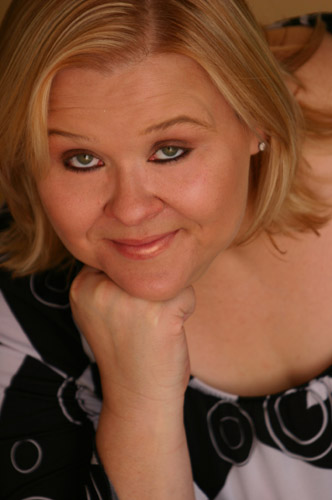
Today I’m honored to be interviewing Bobbie Oliver. Bobbie has been doing comedy for over twenty years and has performed all over the country, including eight straight years of road work. Bobbie has done the Las Vegas Riviera and been on The Nashville Network and Entertainers with Byron Allen. She currently performs, teaches and resides in Los Angeles, CA.
1. How are you using the internet / social media to promote your career?
I have three websites, a blog, an online newsletter called The Rubber Chicken gazette and of course I use Facebook, MySpace and email.
2. Have you noticed the payoff yet?
Totally! I think my individual websites have been most helpful, and after that I’d say Facebook. When I got my website up for my class, my business increased exponentially. And I’ve also noticed that Facebook creates a lot of recognition. When I go to different places, people come up to me and go, “Oh hi, you’re Bobbie Olivier, we’re Facebook friends.” It helps keep you on people’s minds, plus I post videos on my website.
Every time someone signs up for my comedy class, I ask how did you hear about me, and it’s getting more and more where people are saying “I Googled comedy classes, and your name came up.” I pay to have certain search words come up for me. And Chuckle Monkey — I can’t say enough about what a huge resource that is that we didn’t have available to us in the early 90s. You can find out about open mics and bookers, and I also advertise on chuckle monkey. I get way more people from my internet ads than from my print ads. A lot of newspapers write about me, and when they do, they always say go to standupacademy.net for more info.
3. What do you think about posting videos of your sets online?
I put videos of myself on my website but I don’t utilize YouTube and I don’t put videos on Facebook or anything — I prefer to have my own control over it. I know a lot of people use YouTube and I think that’s great but I think if you use it you should dismantle the comments or set them so that you have to approve them so you don’t have a video full of people dissing you online. With the internet people love to go online and make mean comments about people’s acts. Plus, if they’re on my website then I own them, and I know that some web sites (like Facebook and MySpace) have changed their regulations and what they actually own.
4. How do you think digital tools will change comedy?
I can tell you how much they’ve changed comedy already. Comedy now versus comedy then is like a doctor putting leeches on people versus all the medical technology we have today. It’s night and day.
When I started in 1989 there was no internet. I mean it existed but not for the common people. So technology has completely changed everything. When I first started, there was a yearly book that would have the names and contact info of comedy clubs and comedians. I was in the book, but if you moved during the year, you couldn’t update that information until the following year. It was very antiquated and a very cumbersome way of finding out about people.
Also, it used to be that we had black and white headshots as people didn’t have easy access to affordable digital cameras. We always had to find an expensive photographer and pay for the negatives. Now you can have your friend take a headshot of you and get it online in minutes. It used to take weeks or months to get anything sent out and the cost would really add up, and you’d have to print photos in bulk. Now you can print your own pictures real cheap and one copy at a time. It’s the same with your resume. If you get something great on your resume you don’t have to wait until you get more resumes printed.
We also used to work in VHS which is real expensive to mail, and there was no place bookers could go and look at you except your press kit. You’d have to physically mail them a big VHS tape, which if you’re sending a lot of, got real expensive. Now you can send a DVD or let someone look at you online. Technology has completely revolutionized standup comedy and the way you can promote / pimp yourself: it’s easier, cheaper, more accessible. Like I said, it’s night and day.
5. Do you think this “ease of pimping” has led to more bad comedians?
Not necessarily: I started the tail end of the comedy boom when everyone and their brother was a comedian. It’s still like that in LA now, but it used to be like that everywhere. I don’t think that when a person is deciding to be a comedian or not, they think about promoting themselves yet. I don’t think it’s affecting how many people become comedians, I think it affects a comedian’s ability to look better than they actually are because of a slick promo kit, and maybe they can pimp themselves heavier and faster than they could before.
By the way, if you’re a comedian reading this, you can get a nice electronic press kit: It’s not really a website, it’s about $100 a year, and it has everything that goes into a press kit but it’s online. There’s a place for video, headshots, a calendar, press reviews, but it’s more compact than a website. I think it’s easier for people to view the video and it’s cheaper. Some people use those to submit to NACA and all that. You can view one such place here. However, if you can afford your own website, do it!
I also think it’s much easier to create a fan base on the internet. I was on the road full time from ‘91 to ‘98 and I know a lot of comics would collect fans’ mailing addresses and send them post cards when they were coming to town next, which is difficult and costly. Now you have Facebook, email lists and Twitter (which I’m not on) and fans can find out much easier when you’ll be there.
6. How much information do you tend to share on the social networks?
I use my Facebook for multiple things. One is to communicate information with a large group of people like “I’ll be out of the office today and email you tomorrow.” I also use status updates to say witty things throughout the day so people will comment on it, see it or respond — and it keeps you in people’s minds.
I have pretty much an open book policy. Being a comedian I try to make myself vulnerable and share personal things about myself. I think whatever you try to hide the internet will bring up anyway. When I Google myself I’m amazed where I show up. I’ve seen people who have done blogs on me that I never knew existed. I was mentioned on someone’s blog and the blog said they’ve seen me perform and worked with me, but had never taken my classes but recommended my class. I saw another blog that named my blog a top ten blog. Just a lot
of different things I never knew were out there about me. I’ve also seen some comedy contests I’ve won and that they’re using my name in advertising. One last example was a story in the University of Laverne: I would’ve never known was there without Google.
7. What’s the weirdest stuff / “perks” that you’ve experienced due to your combination of technology and the internet.
People are constantly offering to pay me to pee on them for some reason. I don’t know what it is about me that makes people want me to pee on them. But, I do have to pee a lot, and I could use the money!
A lot of times someone will have seen me on a show and friend me on Facebook. But comedy in general can always get you drugs and laid. I mean I’m married so I don’t go around getting laid on Facebook, but you so could. I got contacted by the Myth Busters people the other day, they had to have heard of me somehow and I’m sure having a strong internet presence helped a lot.
8. A majority of comics are males. Have you noticed any differences in how male and female comics use the internet to promote their respective careers? Is there some information you’d feel comfortable sharing online if you were a man that you don’t feel comfortable sharing as a woman?
I think that as a woman, I would never put my home address on the internet. I ended up getting a PO Box because I needed a public address for deposits and registration.
I think the biggest difference, isn’t male and female but age and experience. I think the younger people, you guys, grew up on computers so you’re very familiar and very savvy, whereas us older people can be kinda late to the game on that.
I have so many stalkers, and I’m not sure it’s a problem men have. When I say I’m gonna be somewhere on Facebook, there’s always people showing up I didn’t know were gonna show up. I have a few people who follow me around that I’d rather didn’t but you can’t really exclude who gets what information. Although, I’ve had to go in and block people from my Facebook, but you have to make info public if you’re a comedian. So people know where I am. If you wanted to kill me it would be easy to find me. And I don’t think men are thinking about that when they’re walking to their cars after the show.
9. Why do you think there’s so many fewer female than male comedians?
Women aren’t raised to be what you have to be in order to be a comedian. You have to be tough, ballsy, and vulnerable. Women are raised to be sweet. And audiences can take things from a man they can’t take form a woman. Men can be dirtier. Women in our society aren’t taught to be outspoken and boisterous and give their opinions on everything like you have to do with comedy. It’s definitely a man’s game but I definitely prefer women in it.