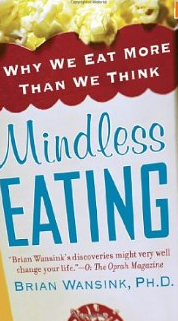
“Almost any sign with a number promotion (2 for $2) leads us to buy 30 to 100 percent more than we normally would.” (24)
“If we consciously deny ourselves something again and again, we’re likely to end up craving it more and more.” (27)
“Dish out 20 percent less than you think you might want before you start to eat.” (34)
“If our guests had their tables continually bussed, they continually ate. Clean plate, clean table, get more, eat more.” (39)
“If a person thinks he ate less than that typical volume, he’ll think he’s hungry. If he thinks he ate more, he’ll think he’s full.” (45)
“Volume trumps calories. We eat the volume we want, not the calories we want. If you were to make a given amount of food twice as caloric, people wouldn’t complain that they couldn’t eat all of it. If you made the same amount half as caloric, people wouldn’t complain they were still hungry. In both cases, they would say they were full.” (45)
“The faster we wolf down our food, the more we eat.” (46)
“Sure, a person saves some money by buying the big M&M’s bag, but if he decides to watch a hundred videos in the next yar, it will also cost him nine pounds of extra weight.” (59)
“We all consume more from big packages, whatever the product.” (59)
“Our brains have a basic tendency to overfocus on the height of objects at the expense of their width.” (62)
“The people given a short, wide glass poured an average of 19 percent more juice or soft drink than those given the tall, thin glass.” (63)
“Setting the table with the wrong dinner plates or serving bowls – the big ones – sets the stage for overeating.” (70)
“Increasing the variety of a food increases how much everyone eats.” (71)
“The more you think of something, the more of it you’ll eat.” (80)
“The more hassle it is to eat, the less we eat.” (84)
“When people ate alone, some ate very little and others ate quite a lot… When eating in groups of four or eight, light eaters ate more, and heavy eaters ate less.” (98)
“It’s about as close to an established fact as things get in the social sciences: People who watch a lot of TV are more likely to be overweight than people who don’t. The less TV people watch, the skinnier they are. It doesn’t matter if they’re 14 or 44. It doesn’t matter if they watch network TV, cable TV, the Food Network, or the NASCAR Network. As TV viewing goes up, weight goes up.” (102)
“Anything that takes our focus off the food makes us more likely to overeat without knowing it.” (104)
“The atmosphere of a restaurant can cause you to overeat if it gets you to stay longer (thus ordering and eating more), or if it gets you to eat faster.” (106)
“If we can’t see the food and someone tells us we’re going to taste strawberry, we taste strawberry, even if it’s really chocolate.” (120)
“If you expect food to taste good, it will. At the very least, it will taste better than if you had thought it would only be so-so… If you expect a food to taste bad, it will.” (122)
“The foods with descriptive names sold 27 percent more. And even though they were priced exactly the same, the customers who ate them consistently rated them as a better value than did the people who ate the same dishes with the boring old names.” (126)
“The foods with descriptive names were rated as more appealing and tastier than the identical foods with the less attractive labels.” (126)
“The customers who ate the food with descriptive names had more favorable attitudes toward the cafeteria as a whole.” (127)
“Despite what they say, most people can’t pick their brand once it’s out of the package and into a bowl.” (130)
“Most people use a two step approach to buying wine: they choose a price level, say $10, and they then look for a bottle with a nice-looking label.” (133)
“The feelings we have when we first eat a food can follow us for a lifetime. It doesn’t matter whether we’re an adult or a child.” (156)
“We discovered that people who ate the best one first often shared one of two characteristics: they either grew up as a youngest child or came from large families. The people most likely to save the best for last, on the other hand, had grown up as an only child or as the oldest.” (158)
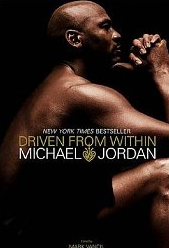
I recently read “Driven From Within” by Michael Jordan. Below are the quotes I found most interesting. As always, if you like the quotes, please buy the book here.
“Players who practice hard when no one is paying attention generally play well when everyone is watching.” (8)
“What I did on the floor drove the marketing, not the other way around. The Jordan brand was driven by what I did every night playing the game.” (12)
“When my play starting providing me with rewards, then I wanted to prove I deserved them. I never felt the desire to rest on what I had accomplished.” (13)
“I never felt like I deserved to drive a Bentley when I got my first contract, or live in a mansion. Those things might be symbols of success to some people, but there are a lot of people who confuse symbols with actual success.” (13)
“Just like my high school coach used to say: It’s hard, but it’s fair.” (13)
“I had no doubts or fears because I never had expectations that were out of context with my skill level.” (25)
“No one had in mind what would be acceptable for me. After the first year, the expectations came, but by that time I had positive habits.” (33)
“I understood that the reason I was getting attention was because of the work I had put in up to that point, not because of what I had done to meet other people’s expectations for me.” (33)
“The whole marketing approach is about drawing attention to the product. Once that happens, and everyone performs the way they are supposed to perform, then the two come together like a perfect marriage.” (48)
“You have to be uncompromised in your level of commitment to whatever you are doing, or it can disappear as fast as it appeared.” (52)
“Some players noticed me because of everything I was doing off the court, and that was the wrong reason to pay attention to me. Pay attention to the way I played the game. Pay attention to my passion. Pay attention to the idea of focusing on improvement every day. Pay attention to my commitment. Commitment cannot be compromised by rewards. Excellence isn’t a one-week or one-year ideal. It’s a constant. There will be days when you don’t feel on top of your game, or meetings in which you aren’t at your best, but your commitment remains constant. No compromises.” (52)
“Authenticity is about being true to who you are, even when everyone else wnats you to be someone else.” (135)
“It’s a lot harder to become the best you can be when you’re focused on trying to be the best version of someone else. There’s nothing authentic in that, and if it’s not authentic, then it’s not going to last.” (135)
“Maybe even a shot that could have won a game. I can deal with that. If I don’t miss the shot, then I don’t miss it – we win. I can rationalize the fact there are only two outcomes: You either make it, or you miss it. I could think that way because I knew I had earned the opportunity to take that shot.
I had put in all the work, not only in that particular game, but in practice every day. If I missed, then it wasn’t meant to be. That simple. It wasn’t because the effort wasn’t there. It wasn’t because I couldn’t make the shot, because I had taken the same shot many time in every situation. As soon as the ball went up, there weren’t any nerves because I had trained myself for that situation.
I was as prepared as I could possibly have been for that moment. I couldn’t go back and practice a little harder. I knew I had done the right things to prepare myself for that situation. One way or another, I knew I was prepared to be successful. Now, if you know you haven’t prepared correctly, or you know you haven’t worked hard enough, that’s when other thoughts and emotions creep into your mind. That’s stress. That’s fear.” (167)
“It’s the same process for doing anything, anywhere in life no matter how big or small the stage. Whehter it’s running a corporation, taking a test in second grade or taking a shot ot win a game, at that moment you are the sum total of all the work you have put in, nothing more and nothing less. If you are confident you have done everything possible to prepare yourself, then there is nothing to fear. There’s no stress in losing under those circumstances. It just wasn’t meant to be.” (167)
“If I go to New Jersey for Game 56, we were probably expected to win the agme by 30 points in those days. But that never dawned on me. It was the idea somebody might be sitting there who had never seen Michael Jordan play. I thought about that person who had never experienced the excitement or entertainment I could provide. That would be the thought that drove me to play that game.” (181)
“When I did get attention, I wanted to show people that I deserved it.” (185)
“The products, companies and people who stay true to who they are usually end up being around for a long time. The ones that lose their way by jumping on one fad or another, or trying to be something other than what or who they are, don’t last long.“ (194)
“We bring our personalities, our visions and our creativity to the discussion, and we don’t give a damn about getting credit.” (202)
“Successful people listen. Guys who don’t listen, don’t survive long.” (202)
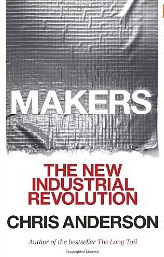
“We are all Makers. We are born Makers (just watch a child’s fascination with drawing, blocks, Legos, or crafts), and many of us retain that love in our hobbies and passions.” (13)
“The great opportunity in the new Maker Movement is the ability to be both small and global. Both artisanal and innovative. Both high-tech and low-cost. Starting small but getting big. And, most of all, creating the sort of products that the world wants but doesn’t know it yet, because those products don’t fit neatly into the amss economics of the old model.” (16)
“We are surrounded by physical goods, most of them products of a manufacturing economy that over the past century has been transformed in all ways but one: unlike the Web, it hasn’t been opened to all. Because of the expertise, equipment, and costs of producing things on a large scale, manufacturing has been mostly the provenance of big companies and trained professionals. That’s about to change.” (17)
“”Place” matters less and less in manufacturing these days – ideas trump geography.” (47)
“Now we hardly give the details of computing a thought, in part because maturing technology hides most of that plumbing from us.” (59)
“In short: our species turns out to be a lot more diverse than our twentieth-century markets reflected. The limited store selection of our youth reflected the economic demands of retail of the day, not the true range of human taste. We are all different, with different wants and needs, and the Internet now has a place for all of them in the way that physical markets did not.” (64)
“The Internet also lengthened the tails of physical product markets for consumers. But it did so by revolutionizing distribution, not production.” (64)
“Remember that the real Web revolution was not that we could just buy more stuff with greater choice, but make our own stuff that others could consume.” (65)
“The rise of Facebook, Tumblr, Pinterest, and all the others like them is nothing less than a massive attention shift from the commercial content companies of the twentieth century to the amateur content companies of the twenty-first.” (66)
“Manufacturing has now become just another “cloud service” that you can access from Web browsers, using a tiny amount of vast industrial infrastructure as and when you need it. Somebody else runs these factories; we just access them when we need them, much as we can access the huge server farms of Google or Apple to store our photos or process our e-mail.” (66)
“Nich goods aimed at discriminating audiences can command higher prices.” (67)
“Adam Davidson writers, “Once people reach some level of comfort, they are willing – even eager – to trade in potential earnings at a lucrative but uninspiring job for less (but comfortable) pay at more satisfying work.” (70)
“In all cases, people would pay more for things where their own sweat was one of the ingredients.” (71)
“We live in a “remix” culture: everything is inspired by something that came before, and creativity is shown as much in the reinterpretation of existing works as in original ones.” (74)
“What the new manufacturing model enables is a mass market for niche products. Think ten thousand units, not ten million (mass) or one (mass customization).” (77)
“The collective potential of a million garage tinkerers is about to be unleashed on the global markets as ideas go straight into production, no financing or tooling required.” (78)
“We’re competing in the international market from day one. The usual trap of focusing on the local market first with hopes of expanding internationally later leaves companies unprepared for global competition. Selling to the whole world on day one makes a company stronger.” (105)
“What entrepreneurs quickly learn is that they need to price their product at least 2.3 times its cost to allow for at least one 50 percent margin for them and another 50 percent margin for their retailers (1.5 x 1.5 = 2.25).” (106)
“Most companies actually base their model on a 60 percent margin, which would lead to a 2.6 multiplier, but I’m applying a bit of a discount to capture that initial Maker altruism and growth accelerant.” (106)
“It may sound steep to you now, but if businesses don’t get the price right at the start, they won’t be able to keep making their products, and everyone loses.” (107)
“Any product that can build a community before launch has already proven itself in a way that few patents can match.” (109)
“Once you seed your community with content and start attracting users, your job is to give them jobs. Elevate people who seem to be constructive participants to moderator status, and give especially friendly and helpful members a “noob ninja” badge. Once you promote/reward enough of them for doing a good job of constructive community building, you’ll find that members typically help one another, saving you the work.” (110)
“When you’re creating a community from scratch, consider starting it as a social network rather than as a blog or discussion group.” (111)
“Seen this way, all making in public is marketing. Community management is marketing. Tutorial posts are marketing. Facebook updates are marketing. E-mailing other Makers in related fields is marketing. OF course, it’s not just marketing: the reason that it’s so effective is that it’s also providing something of value that people appreciate and pay attention to. But at the end of the day, everything you do, from the naming of your product to whose coattail you decide to ride (like we chose Arduino), is at least partly a marketing decision. Above all, your community is your best marketing channel.” (112)
“If you’ve given people a reason to gather that serves their needs and interests, crowing about your cool new gizmo isn’t advertising, it’s content!” (112)
“If someone decides to use our files, make no significant modifications or improvements, and just manufacture them and compete with us, they’ll have to do so much more cheaply than we can get traction in the marketplace. If they can do so, at the same or better quality, then that’s great: the consumer wins and we can stop making that product and focus on those that add more value (we don’t want to be in the commodity manufacturing business).” (114)
“it’s a sign of success – you get cloned only if you’re making something people want.” (116)
“When you let anyone contribute and ideas are judged on their merits rather than on the resume of the contributor, you invariably find that some of the best contributors are those who don’t actually do it in their day job.” (127)
“What this taps is the Long Tail of talent; in many fields there are a lot more people with skills, ideas, and time to help than there are people who have professional degrees and are otherwise credentialed.” (127)
“The Web allows people to show what they can do, regardless of their education and credentials. It allows gorups to form and work together easily outside of a company context, whether this involves “jobs” or not.” (148)
“As Thomas Friedman puts it, “It used to be that only cheap foreign manual labor was easily available; now cheap foreign genius is easily available.” (148)
“Companies are full of bureaucracy, procedures, and approval processes, a structure designed to defend the integrity of the organization. Communities, on the other hand, form around shared interests and needs, and have no more process than they require. The community exists for the project, not to support the company in which the project resides.” (150)
“It doesn’t matter who the best people work for; if the project is interesting enough, the best people will find it.” (151)
“In short, electronics can be made in America, as long as they’re specialty electronics, selling in the thousands, no millions.” (161)
“Kickstarter solves three huge problems for entrepreneurs. First, it simply moves revenues forward in time, to right when they’re needed… Second, Kickstarter turns customers into a community. By backing a project, you’re doing more than pre-buying a product. You’re also betting on a team, and in turn they update you with progress reports and respond to suggestions in comments and discussion forums during the product’s genesis. This encourages a sense of participation in the project and turns backers into word-of-mouth evangelists, which helps projects go viral. Finally, Kickstarter provides perhaps the most important service a new company needs: market research. If your project doesn’t hit its funding target, it probably would have failed in the marketplace anyway.” (167-168)
“The act of “making in public,” which is what Kickstarter project leaders do, turns product development into marketing.” (173)
“By the time a business process is too boring to comment on, it’s probably starting to actually work.” (208)
“For products that can be made robotically, which is more and more of them, the usual global economic calculus of labor arbitrage is becoming less and less important.” (227)
“What we will see is simply more. More innovation, in more places, from more people, focused on more narrow niches.” (229)
“More choices may not mean greater freedom, just a larger number of possible alternatives that are dismissed as wannabes and also-rans.” (16)
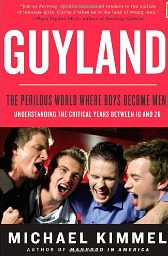
“The passage between adolescence and adulthood has morphed from a transitional moment to a separate life stage. Adolescence starts earlier and earlier, and adulthood starts later and later.” (25)
“They often feel that they’ve spent their entire childhoods being little grownups – being polite, listening attentively, and prepping for college since elementary school.” (27)
“Today, with women appearing to be every bit as professionally competent, career-oriented, and ambitious as men, and equally capable of earning a living wage, there is no longer the same sense of urgency for men to move toward “getting a good job” to eventually provide for the material needs of a wife and children.” (31)
“Masculinity is largely a “homosocial” experience: performed for, and judged by, men.” (47)
“Ninety percent of all driving offenses, excluding parking violations, are committed by men, and 93 percent of road ragers are male.” (51)
“At adolescence, girls suppress ambition, boys inflate it.” (73)
“Interestingly, girls assume they’ll be wrong – they like subjects where their answers are “not necessarily wrong,” while boys assume they’ll be right, so they like subjects where there is no gray area. Girls like English because it’s harder to wrong; guys hate it because it’s harder to be right.” (75)
“In part it’s because the transitional moment itself is so ill-defined. We, as a culture, lack any coherent ritual that might demarcate the passage from childhood to adulthood for men or women.” (100)
“Guys in Guyland want girls to be their “near-equals.” If they don’t play at all, they threaten the legitimacy of Guyland; if they play the game better than the guys, the same threat holds true.” (103)
“In other words, drinking “dangerously” requires a significant amount of safety. You may not know everyone you’re partying with, but you know that the people you are with are very likely to know people you know. You don’t “lose control” without having a large set of “controls” already built into the system.” (104)
“In the case of the University of Colorado, the biggest liquor store, with the closest proximity to campus, was owned by the Director of Athletics.” (119)
“Every generation thinks they had it tougher than the one that comes after them.” (121)
“Sports talk has become the reconstituted clubhouse, the last “pure” all-male space in America.” (127)
“Guys also like following sports because it’s a way to talk with other guys without having to talk about your feelings.” (128)
“Women remind us that we are supposed to be grown men. Other guys allow us to be immature boys. No wonder guys get so easily pissed off at women’s intrusion.” (136)
“Video games outsell movies, books, CDs, and DVDs by a landslide.” (154)
“Guys play video games, gamble, or pose and posture to the musical stylings of inn-city black youth because these poses give them the feeling of being in control.” (156)
“When a guy says he “hooked up” with someone, he may or may not have had sex with her, but he is certainly hoping that his friends think he has. A woman, on the other hand, is more likely to hope they think she hasn’t.” (197)
“There’s an old expression in business circles that holds “men are unsexed by failure, but women are unsexed by success.” For men, success confirms masculinity; for women, success disconfirms femininity – it’s seen as more of a tradeoff. To be taken seriously as a competent individual means minimizing, or even avoiding altogether, the trappings of femininity.” (252)
“In fact, “effortless perfection” may be the closest thing there is today to a “Girl Code.” … The appearance of effortlessness is the way young women reconcile such conflicting demands. “I just happen to be beautiful and brilliant, I can’t help it. Don’t hold it against me.” Effortless also counters the feminine taboo against competition. It’s okay to win, but not okay to try to win.” (254)
“Women sustain Guyland because Guyland seems to be populated by Rhett Butlers, and they are much cooler than the Ashley Wilkeses of the college campus – the guys who study hard, are considerate of their feelings, and listen to them. Those guys are a bit nerdy, good friendship material, but they don’t take your breath away. Better to latch on to the ones who treat you badly, with the hope that your love – and only your love – will transform him into a doting and attentive man, while he retains all the sexy guy-ness that drew you to him in the first place.” (258)
“And they’re right: they did sacrifice. For many men, the demands of being a provider and family man are filled with pressure and insecurity, having to bend to the will of moronic supervisors, placate mercurial clients, and kowtow to demanding bosses. And all for a family that barely appreciates them!” (276)
Today I’m interviewing Rob Durham. Comedian and author of the book “Don’t Wear Shorts On Stage.” Rob has built an act that he prides on originality and his unique point of view. He has been praised by many of the business’s big names whom he has worked with. From Bob Saget calling him “Freaking Hilarious” to Louie Anderson’s written claim of “Very Funny!”, his material is respected by all who hear it. With a smile that says I didn’t get my braces off until I was 27, Rob’s innocent look helps him vent about his other career as an English teacher, his horrible dating history, his wonderfully spunky wife, and other near death experiences.
1. You wrote a book “Don’t Wear Shorts On Stage” and have a blog by the same name. How helpful is having a blog as far as selling a book goes?
Having a blog is the #1 recommendation for anyone trying to sell nonfiction. A blog taught me that! I realized that I was still learning something new about comedy every month, but I had to finish the book. The blog is a nice way to cover other topics that are still coming up. It’s received close to 20,000 hits and has links to purchase my book. I can also see all of the weird Google searches that have accidentally brought people there. I’d like to think a few of them made purchases as well.
2. Your book is self published. What was that process like?
I was lucky to have some good help as far as an editor and a cover artist. My brother, Dave Durham, designed the cover and took the picture (those are even his legs). The other part which I would’ve never been able to do, was transfer my Word document into actual book pages. That takes somewhat expensive software and know-how so I left all that to my editor. Other than that I used CreateSpace and they had 24 hour assistance. They’re by far the best route to go for self-publishing. Other than that, a lot of great advice in on the message boards from other authors.
3. Do you think there will come a day when physical books no longer exist?
Not completely, but if you look at music, CDs and albums are endangered. Kids used to ask, “What’s a record?” I’ve heard a few jokingly ask, “What’s a CD?” It will happen when the publishers are ready for it to happen. I’m all for it because the e-book version of “Don’t Wear Shorts on Stage” is $7 cheaper than a paperback, but I still make more from each ebook sale. Oh, and trees are important too. Once the classrooms replace physical books, that generation will phase most of them out completely in first world countries.
4. You made a separate website/domain name for the book versus for yourself as a performer. What’s your thinking behind that?
The book’s website is technically just an advice blog that links to my comedy website. My comedy website isn’t the right format for a blog but it’s been around since 2004. A lot of club owners still appreciate it when a comedian has a full website, with schedule, available. Club managers aren’t going to go to the trouble of adding comics as Facebook friends to find out who they are. The advice blog gets a lot more hits now, but I like to keep it simple and not too much about me.
5. How has technology changed the comedy business since you started?
After a few years as an opener I made a bunch of VHS tapes and sent them to clubs only to find out that they wanted DVDs. After I got DVDs made of some sets it went to online. Having clips online is probably the biggest advantage for comics trying to get more work. The problem is that everyone can do it now, so bookers’ inboxes are just as flooded as the corner of their office used to be with envelopes. Self-promo is another evolving aspect. I always laugh when I see professional looking, over the top posters for an open mic that no one is going to attend. Still, if someone is funny enough, word will spread much easier because of technology. And while it can even be a shortcut to short term success, the importance of being funny eventually catches up.
6. What do you think comedy will be like in ten years (as far as technological changes go)?
I think we’ll see a rise in more younger comics having sets online. They have access to so many more types of standup that they’ll be more likely to find an inspiration. While we all grew up watching the same three HBO specials for the entire 1980s, kids today can learn from thousands of comedians online.
I also think that shock humor will bottom out. You can only joke about domestic violence, rape, and abortion in so many ways, right? The average person isn’t nearly as shocked. I also think with the shorter attention spans that even some of the best comics will only need 15-20 solid minutes to make a name for themselves. Who’s going to watch the same thing for more than 8 minutes by 2023?
The real question will be, how can we still make money with online comedy? Sure Louis C.K. did that $5 thing, but those eventually get bootlegged and not everyone is good enough to get people to shell out money for their act. Comedy isn’t done justice unless it’s live. I really hope technology doesn’t ruin comedy (and by that I mean our ability to still make money).
7. How are you using the internet / social media to promote your career?
It’s pretty much all promotion for the book. I’ll mention if I have shows coming up in a certain town on Facebook, but anyone that wants to see me probably already has. With the book, I had to disguise the promotion as the advice blog, otherwise it would be one long timeline of “buy my book dammit!”
8. Have you noticed the payoff yet?
Yes. Without Facebook and my blog my book sales would probably be limited to what I sell after shows. Every month I sell books via amazon to people I don’t know. I’m even getting sales from Amazon Europe which feels pretty cool. I finally got my ebook into a version I can sell to Kindle’s straight from Amazon and it’s really making a difference in the numbers.
Technology has paid off. As far as the whole payoff for the effort of writing a book…that happened when I got hired as an English teacher (I brought the book to the interview).
9. What do you think about posting videos of your show online?
I get this question a lot so I put it in the blog awhile. It all depends on what level you’re at. I don’t think it will make or break anyone’s career (other than a few exceptions like Bo Burnham). I had to take my youtube videos down because my freshmen students found them on the third day of school. I guess I should put up some 100% squeaky clean clips. I really don’t think it matters because club managers don’t randomly look around for new acts on youtube.
10.How do you think digital tools will change comedy?
Our headshots will all look much prettier! Comics can dub in laughter for their recordings. In other words, we’ll all pretty much use them as ways to cheat.
11. How much information do you tend to share on the social networks?
I try to make most of my posts “amusing.” I have hundreds of pictures, like most people, and of course the promo (which I also try to make amusing). I can’t believe how socially unaware people are when they air their dirty laundry and cries for help. It makes me really glad Facebook wasn’t around when I was a young lad or everyone on the internet would’ve been exposed to my sorry-ass attempts at poetry.
12. What’s your weirdest online experience involving your comedy career?
In February of 2012 Marc Maron tweeted “Who is @RobDurhamComedy to tell comics how to do comedy?” to his 100,000+ followers. I consulted some of my mentors and they said to handle it with him, but not on Twitter. A few people piled on, including some comics I didn’t know had anything against me, but it resulted in a record day for my blog (not to mention some extra book sales). The biggest question was “how the hell did he hear about my book?” It turns out in was a misunderstanding with a local open-mic comic who wrote Maron a nasty letter about me. I sent Marc a book and a letter explaining who I was and never heard back of course. He gets in a lot of internet fights. The funniest (and maybe saddest) part was the local online paper writing a big article about a Tweet. It’s all water under the bridge with the local comic who I’m now friends with. I would love to open for Maron some day just so we could laugh about it. Honestly, I haven’t heard one negative review by anyone who’s actually read my book. There’s been backlash about the blog, but what people need to remember is that I’m offering advice for those who want to make a living doing stand-up. They can defy the suggestions I give and make it tougher to earn money.
13. Any other thoughts you’d like to share?
Technology is a huge tool for standup but it’s not a shortcut. All of the things that involve technology and comedy need to be prioritized BEHIND writing jokes. Why spend 2 hours making a poster for a show that won’t be entertaining? You can make yourself look like a pro online, but once it comes to stage time, the truth will come out.